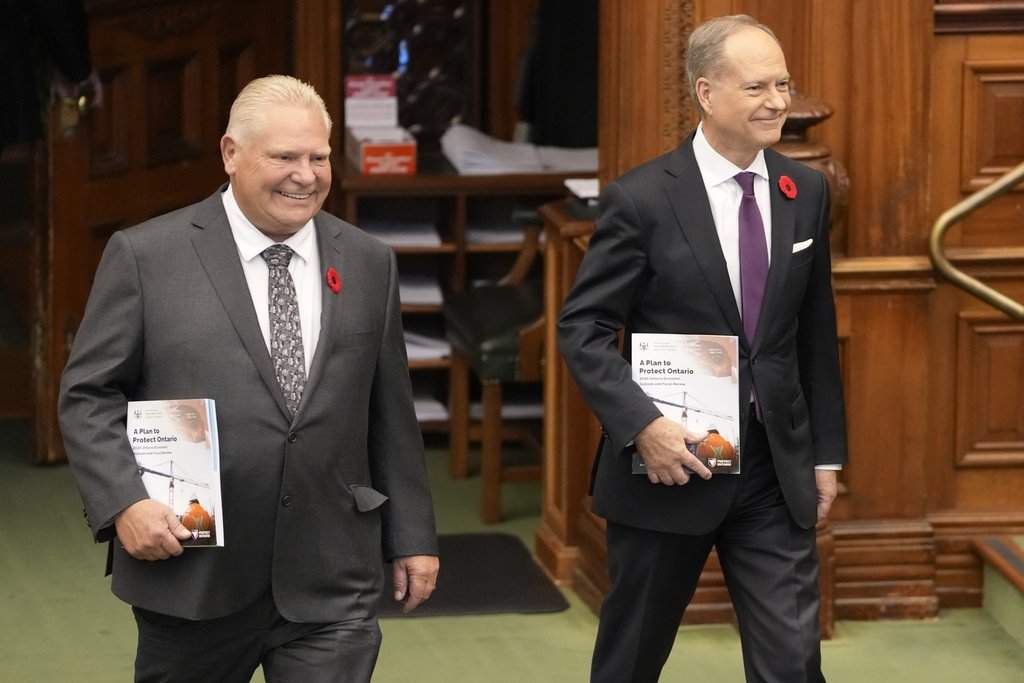
When a credit rating agency flashes a yellow warning light at Canada's largest provincial borrower, you'd expect some panic at Queen's Park. Instead, Ontario Finance Minister Peter Bethlenfalvy shrugged it off, calling the warning of a potential credit rating downgrade "not a hinge moment."
Bold move. Maybe even a smart political soundbite. Recently making waves in this space: The Night Bitcoin Forgot It Was Supposed to Be Gold.
If you look at how municipal and provincial bond markets actually operate, dismissing a negative outlook from a major rating agency like Moody's, S&P Global, or DBRS Morningstar isn't just casual confidence—it's a calculated bet with real taxpayer money on the line. Ontario carries one of the largest sub-sovereign debt loads on the planet. When the person holding the purse strings tells voters and bondholders that a downgrade threat doesn't represent a turning point, we need to look past the press conference and check the math.
Why Ontario's Credit Rating Warning Matters More Than Political Spin
Let's get the basics straight first. A credit rating warning—usually delivered as a change in outlook from "stable" to "negative"—doesn't immediately spike the province's borrowing costs overnight. That part of Bethlenfalvy's argument holds water. Institutional investors don't dump billions in Ontario bonds the second an analyst updates a PDF report. Additional details on this are detailed by CNBC.
Markets price in risk before the official downgrade happens.
Bond traders watch deficit projections, debt-to-GDP ratios, and interest-to-revenue metrics long before an agency makes a formal cut. If Ontario's fiscal trajectory keeps drifting away from balanced budgets while economic growth slows down, lenders start demanding a higher yield to hold that paper. Even a tiny bump of 10 or 15 basis points on a debt pile exceeding $400 billion translates into hundreds of millions of dollars every single year. That's money pulled straight out of hospitals, transit projects, and classrooms just to pay interest to bondholders.
Calling that "not a hinge moment" sounds reassuring on the evening news. In reality, ignoring early fiscal warnings is exactly how provinces sleepwalk into multi-year borrowing penalties.
What Rating Agencies Actually Look At
People often assume credit analysts only care about whether a government runs a deficit in a single fiscal year. They don't. Rating agencies look at structural trends over a three-to-five-year horizon. Specifically, they focus on a few core pressure points:
- Net debt-to-GDP ratio: How big is the province's debt compared to the total economic output generating tax revenue to pay it off?
- Interest on debt as a share of revenue: How many cents out of every tax dollar go straight toward servicing past borrowing before a single service gets funded?
- Revenue volatility: How exposed is the provincial treasury to real estate slowdowns, corporate tax dips, or federal transfer changes?
- Capital spending discipline: Are infrastructure projects funded sustainably, or is the province slapping routine operational costs onto the provincial credit card?
When an agency issues a warning, it's telling the government that one or more of these guardrails is bending. You can call it whatever you want at a podium, yet the bond market reads the underlying spreadsheet.
The Real Story Behind Peter Bethlenfalvy's Strategy
To be fair to Peter Bethlenfalvy, finance ministers operate in a tough bind. If he stood in front of cameras and admitted that a credit rating warning was a crisis, he'd spook investors and hand opposition critics an easy headline. Downplaying the drama is standard operating procedure in public finance.
There's also a legitimate economic argument behind Ontario's current posture. Ontario has spent heavily on transit expansion, highway corridors, and industrial incentives aimed at attracting electric vehicle and battery manufacturing. From the government's perspective, borrowing today to build infrastructure and lock in long-term industrial capacity grows the economic pie tomorrow. If GDP grows faster than the debt, the ratios eventually heal themselves without painful austerity cuts.
That theory works great on paper. Everything hinges on execution.
If population growth cools down, or if global trade friction slows manufacturing exports, Ontario's revenue projections take a direct hit. Meanwhile, the debt remains locked in. Unlike a household that can cancel streaming subscriptions or delay buying a car, a province faces rigid spending demands. Healthcare costs rise automatically as the population ages. Public sector wage settlements—especially after courts struck down wage-restraint legislation like Bill 124—lock in higher baseline operating expenses for years.
Once recurring operating expenses climb while economic growth stalls, a "non-hinge moment" turns into a fiscal trap fast.
How a Provincial Downgrade Hits Your Wallet Directly
Most residents tune out whenever politicians and economists argue over bond ratings. It feels abstract, like inside baseball for Bay Street bankers. It isn't.
Here is how a credit rating downgrade filters down to everyday life in Ontario:
- Higher debt service costs crowd out public services. Every extra dollar spent on bond interest is a dollar unavailable for emergency room staffing, school repairs, or municipal transit subsidies. You don't get a bill in the mail labeled "credit downgrade fee," yet you feel it through longer wait times and delayed infrastructure.
- Trickle-down borrowing costs for municipalities and universities. Ontario's credit rating sets the ceiling—or at least the benchmark—for public institutions across the province. Cities, school boards, hospitals, and public utilities often borrow through provincial agencies or see their own credit spreads widen when the province gets marked down. Higher borrowing costs for your local municipality frequently end up on your annual property tax bill.
- Reduced flexibility during the next downturn. The whole point of maintaining a strong credit rating during normal economic times is preserving borrowing headroom for genuine emergencies. If Ontario enters a recession already weighed down by a downgraded rating and heavy interest obligations, the province has far less room to cut taxes or support households when times actually get rough.
Comparing Ontario's Debt Position With Other Canadian Provinces
Context matters here. Ontario isn't operating in a vacuum, and bond investors constantly compare Canadian provinces against one another when deciding where to park capital.
British Columbia, for instance, enjoyed top-tier ratings for years before rapid deficit expansion triggered its own round of downgrades and negative outlooks from S&P and Moody's. Quebec went through decades of heavy debt accumulation before implementing strict fiscal rules and a dedicated debt-reduction fund that earned it credit upgrades over time. Alberta rides the rollercoaster of oil royalties, swinging from massive surpluses to deficits depending on global energy prices.
Ontario sits in a unique spot. Its economy is far more diversified than Alberta's, giving it a stable tax base that investors like. At the same time, its sheer debt volume makes it the heavyweight borrower in the Canadian provincial bond market. Because Ontario issues so much debt every year just to refinance maturing bonds and fund new deficits, liquidity is high—meaning institutional buyers can always trade Ontario paper easily. That liquidity cushions the blow of a warning, which partly explains why Bethlenfalvy feels comfortable projecting calm.
Still, liquidity isn't immunity. Ask any fixed-income portfolio manager in Toronto or New York: liquidity helps you sell a bond, while credit quality determines the price you get for it.
What Bond Markets Are Actually Watching Next
If you want to know whether Ontario will dodge an actual downgrade over the next 12 to 18 months, ignore the political talking points and watch three concrete indicators instead.
First, look at mid-year fiscal updates and the annual Ontario Budget. Rating agencies pay close attention to whether the Ministry of Finance hits its own deficit targets or quietly pushes balanced-budget timelines further into the future. Repeatedly moving the goalposts erodes credibility faster than a single bad quarter.
Second, track Bank of Canada interest rate policy alongside provincial bond yields. Even when central banks lower overnight policy rates, long-term 10-year and 30-year bond yields don't always drop in lockstep. Because Ontario relies heavily on long-dated bonds to fund infrastructure, sticky long-term yields keep refinancing costs elevated as older, cheaper pandemic-era debt rolls over into higher rates.
Third, watch Ontario's real GDP per capita and housing market activity. Land transfer taxes and consumer spending drive a massive chunk of provincial revenue. If high household debt keeps consumers on the sidelines and real estate transactions stay sluggish, treasury revenues will undershoot optimistic forecasts.
Practical Ways to Track Provincial Fiscal Health Yourself
You don't need a Bloomberg terminal or an economics degree to verify whether the government's fiscal narrative matches reality. Whenever news breaks about Ontario's credit outlook, check these primary sources directly:
- Read the Financial Accountability Office of Ontario (FAO) reports. Unlike the Ministry of Finance, the FAO is an independent officer of the Legislature that produces blunt, non-partisan assessments of provincial debt, deficit projections, and spending risks.
- Check the interest on debt line item in the provincial budget tables. Compare the dollar amount spent on debt interest against major ministries like Education or Transportation to see the real opportunity cost.
- Look at the spread between Ontario 10-year bonds and Government of Canada 10-year bonds. When that gap widens, institutional investors are actively pricing in higher provincial risk regardless of what any minister says at a press conference.
Bethlenfalvy wants voters to believe a credit warning is just background noise. Markets rarely treat warnings that lightly—and taxpayers are always the ones who pick up the tab when the bill finally comes due.