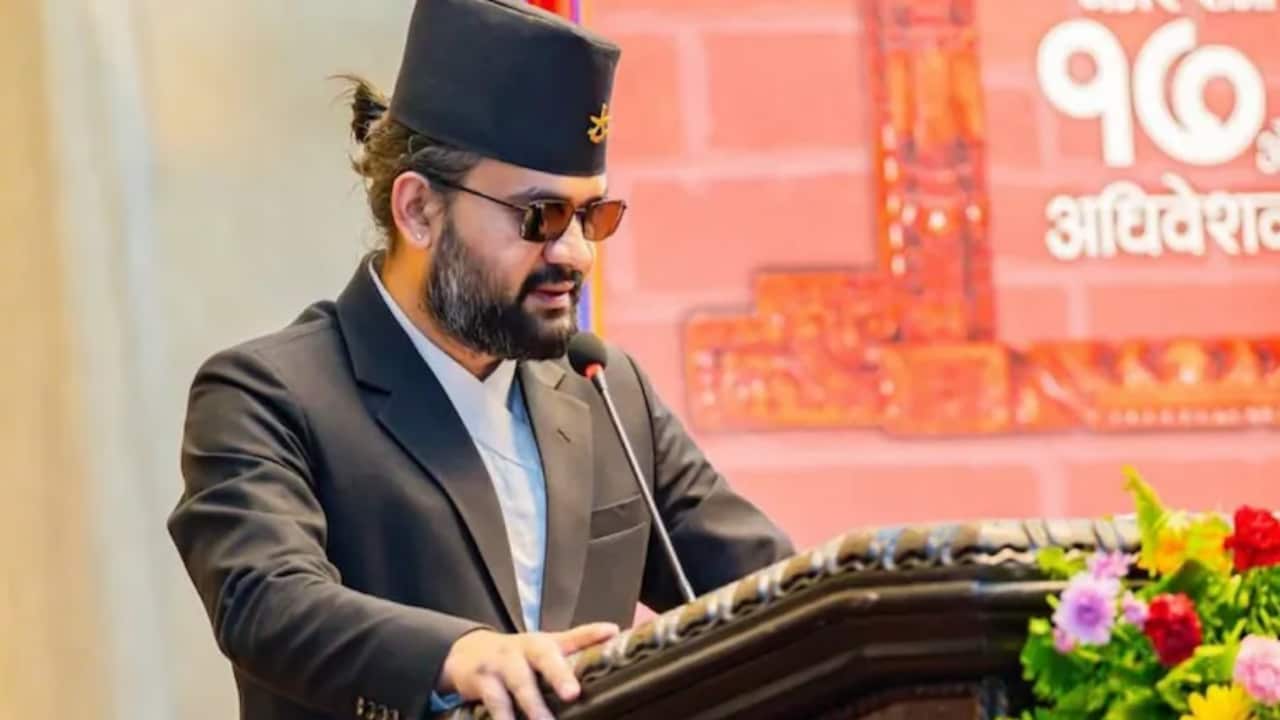
Nepal Prime Minister Balendra Shah secured an official medical exemption to wear his signature dark sunglasses inside the House of Representatives, short-circuiting a parliamentary dress code crackdown initiated by Speaker Dol Prasad Aryal. The rapper-turned-politician, widely known as Balen, has made the rectangular black shades an immutable fixture of his public identity, wearing them from campaign trails to his official prime ministerial portrait. When the Federal Parliament Secretariat confirmed receipt of a medical evaluation from Birendra Military Hospital recommending light-sensitivity protection, it signaled more than a simple health accommodation. It laid bare an ongoing institutional clash over political performance, decorum, and the personality cults reshaping modern governance in South Asia.
The Anatomy of a Parliamentary Clash
Rules matter in legislative chambers. Tradition dictates that heads of state and government adhere to unwritten codes of transparency, chief among them the unobstructed visibility of the eyes during public accountability sessions. Speaker Dol Prasad Aryal attempted to enforce this norm by instructing party whips that dark eyewear was no longer permissible during parliamentary proceedings. The policy targeted a growing trend of lawmakers treating the floor like an outdoor lounge, but the primary target of public irritation was unmistakable. Balen Shah's permanent barrier of dark glass had long served as a focal point for critics who argued the aesthetic radiated detachment and authoritarian insulation.
Instead of folding to legislative peer pressure, the Prime Minister's Office routed an official medical report through bureaucratic channels. Authored by ophthalmologist Associate Professor Lieutenant Colonel Dr. Sachit Dhakal, the document established that Shah suffers from light sensitivity and requires protective shades alongside prescribed eye drops. Legally and procedurally, the Speaker was checkmated. The loophole allowing medical exceptions swallowed the rule.
Beyond the Prescription
Medical justifications hold weight, yet reducing this saga to a simple ophthalmological diagnosis misses the wider political current. Balen Shah did not enter politics through traditional party cadres or decades of internal factional maneuvering. His rise from underground hip-hop artist and structural engineer to the highest executive office was built on an explicit rejection of old-guard political culture. The sunglasses are part of that armor. They project an unblinking, emotionless modernism that separates him from the teary-eyed rhetoric and theatrical posturing of Nepal's older political elite.
When opposition lawmakers push back against the shades, they are not merely objecting to a violation of dress code. They are contesting the asymmetry of power. A politician who hides his eyes denies his interrogators the universal human cue of gaze direction, maintaining an unreadable composure during high-stakes legislative questioning. By securing a military hospital exemption, Shah weaponized institutional bureaucracy to protect his trademark aesthetic, ensuring that the visual symbol of his populist brand remains intact right as he steps up to face hostile questioning on the legislative floor.
The Performance of Power
Optics dictate political survival. In parliamentary democracies, face-to-face accountability relies heavily on the psychological theater of direct eye contact. Voters expect their leaders to look them in the eye, even if that eye contact is mediated through television screens and live legislative broadcasts.
By insisting on keeping the dark lenses on, Shah challenges the premise that transparency requires unshielded eyes. He substitutes physical exposure with administrative compliance, turning a medical certificate into a shield against behavioral conformity. Parliamentary secretariats can issue guidelines on attire, but they cannot easily override clinical documentation without sparking a constitutional or executive crisis. The result is a tense compromise where the letter of the health exemption triumphs over the spirit of parliamentary tradition.
As the political establishment adjusts to a leader who refuses visual submission, the broader implications stretch across the governance landscape of Kathmandu. Every legislative session moving forward carries this underlying tension, transforming a simple pair of frames into a permanent monument to institutional friction. The rules were rewritten, the medical board signed off, and the Prime Minister stares down his critics through a permanent wall of black glass.