Viktor Orban spent over a decade turning Hungary into Europe's chief contrarian. He picked fights with Brussels, courted Vladimir Putin, and systematically alienated regional allies. But timelines change fast. Just weeks after a historic electoral earthquake that swept Orban from power, Hungary's newly minted Prime Minister Peter Magyar didn't waste any time sending a message to the world. He packed his bags and headed straight to Warsaw.
Choosing Poland for your first official foreign trip isn't just about diplomatic protocol. It's an explicit declaration of war against the old regime's foreign policy. For years, the historic brotherhood between Poland and Hungary—often summarized by the old adage about two good friends fighting and drinking wine together—was hijacked by Orban and Poland's former Law and Justice (PiS) government to build an illiberal axis. When Donald Tusk's center-right coalition won power in Warsaw in late 2023, that axis shattered. Orban's isolation became complete. Now, Magyar is using Poland to show he's resetting the board.
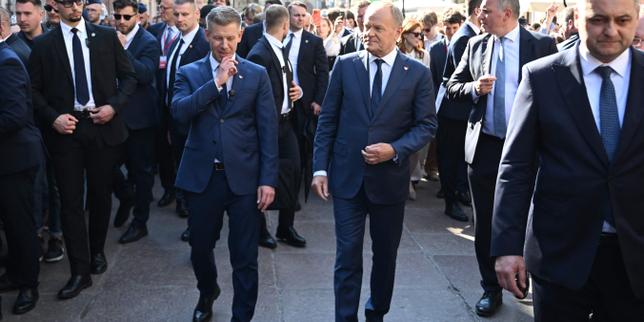
The imagery from the May 20, 2026 meeting between Magyar and Tusk in Warsaw couldn't be clearer. You had two leaders who both managed the seemingly impossible: toppling deeply entrenched, media-controlling nationalist machines. Tusk greeted Magyar like a brother-in-arms, stating frankly that the Hungarian leader was "among friends." But behind the smiles and the warm rhetoric about a thousand-year-old friendship lies a highly calculated strategy to restore Hungary's shattered standing in Europe and unlock billions in frozen cash.
The Master Plan to Revive Central Europe
For the last few years, the Visegrad Four (V4) alliance—comprising Poland, Hungary, the Czech Republic, and Slovakia—was essentially dead on arrival. Orban's refusal to support military aid to Ukraine, combined with his frequent blockades of European Union funding for Kyiv, turned Budapest into a pariah. Polish-Hungarian relations, once the bedrock of Central European solidarity, cratered over Orban's cozy relationship with the Kremlin.
Magyar wants to fix that damage immediately. Standing next to Tusk, he explicitly promised that Hungary will once again be a constructive partner to Poland, Slovakia, and the Czech Republic. He wants to bring the V4 back from the brink and return the region to a position of strength within the EU.
But he isn't stopping at the traditional borders. In a move that caught some regional watchers by surprise, Magyar floated the idea of expanding the V4 format to include nations like Austria, Croatia, Romania, the Western Balkans, or even Scandinavian countries. It's an ambitious bid to transition Hungary from a regional spoiler to a regional coordinator. By shifting the conversation to broad regional cooperation, he's actively trying to bury the memory of Orban's isolationist rhetoric.
Tracking the Cash and Fixing the Rule of Law
Let's look at the real motivation behind this diplomatic blitz. Hungary needs money. Orban's systematic erosion of democratic checks and balances led Brussels to freeze billions of euros in EU funds earmarked for Budapest. It's the exact same trap Poland found itself in under the previous PiS administration.
Tusk successfully navigated those waters, deploying a aggressive campaign to restore judicial independence and convince Brussels to release over €130 billion in frozen funds to Warsaw. Magyar is openly copying the Polish blueprint. During his press conference, he acknowledged that Hungary faces identical challenges regarding the rule of law, anti-corruption measures, and securing EU funds. He admitted he's leaning heavily on the experience of the Polish government to get things done.
"We face similar challenges—issues of the rule of law, securing and effectively utilizing EU funds, and the fight against corruption—which is why I count on the experience of the Polish government." — Peter Magyar
However, Magyar actually holds a distinct advantage that Tusk never had. While Tusk has to wrangle a complicated, multi-party coalition and constantly bump heads with a hostile opposition president, Magyar's Tisza party secured a massive 53% of the vote last month. That gave him a two-thirds constitutional majority. He has the raw legislative muscle to pass deep structural reforms instantly.
Cleaning House and the Fugitive Problem
Magyar is already using that constitutional majority to aggressively purge Orban loyalists from deep state institutions. He has demanded the resignation of key figures, including President Tamas Sulyok, the attorney general, and top judges, labeling them "Orban's puppets." He's also suspended the country's public broadcaster, calling it a "factory of lies," until objective news services can be restored.
But fixing domestic institutions also means dealing with the messy international leftovers of the Orban era. Take the bizarre case of Zbigniew Ziobro, Poland's former Justice Minister. Polish prosecutors have been desperate to charge Ziobro with diverting state funds for personal and political gain. In January, Ziobro managed to secure political asylum in Orban's Hungary, driving a massive wedge between Warsaw and Budapest.
During his trip, Magyar had to answer tough questions about the fugitive. He revealed that since the election, Ziobro apparently fled Europe entirely and is currently in the United States. Magyar didn't offer excuses for the old regime's actions. Instead, he promised full cooperation, announcing the creation of a new National Asset Recovery and Protection Office to hunt down misused public funds and hold Orban's allies accountable.
The Ukraine Tightrope
If there's one area where observers remain skeptical, it's the war in Ukraine. Orban's pro-Kremlin stance was the primary reason Poland cut ties with Budapest. Magyar has drastically shifted the tone, but he's still walking a delicate line that reflects the domestic anxieties of Hungarian voters.
Magyar hinted at ending Hungary's systematic blockage of a massive €90 billion EU loan package for Ukraine. He also explicitly noted that he has personally visited Kyiv, taking a direct swipe at Orban's refusal to do so. However, he maintained that Hungary's priority is bringing the war to an end as quickly as possible and ensuring the protection of rights for the Hungarian minority in Ukraine's Transcarpathia region. He has already scheduled a high-stakes meeting with Ukrainian President Volodymyr Zelensky for early July to iron out these bilateral tensions.
It's a pragmatic, interest-driven foreign policy. Magyar isn't going to become a carbon copy of Western European leaders overnight, and he's been clear that Russia will remain a necessary energy partner out of sheer geographic realism. But by aligning his core geopolitical goals with Tusk, he has effectively removed the veto threat that made Hungary a constant headache for NATO and the EU.
If you're tracking Central European politics, watch how fast Magyar moves on judicial reforms over the next thirty days. The speed with which Brussels reacts to his legislative changes will tell you everything you need to know about how quickly Hungary can shed its pariah status. Watch the July meeting with Zelensky closely; that will be the true test of whether Hungary's diplomatic pivot is a permanent structural shift or just clever marketing.