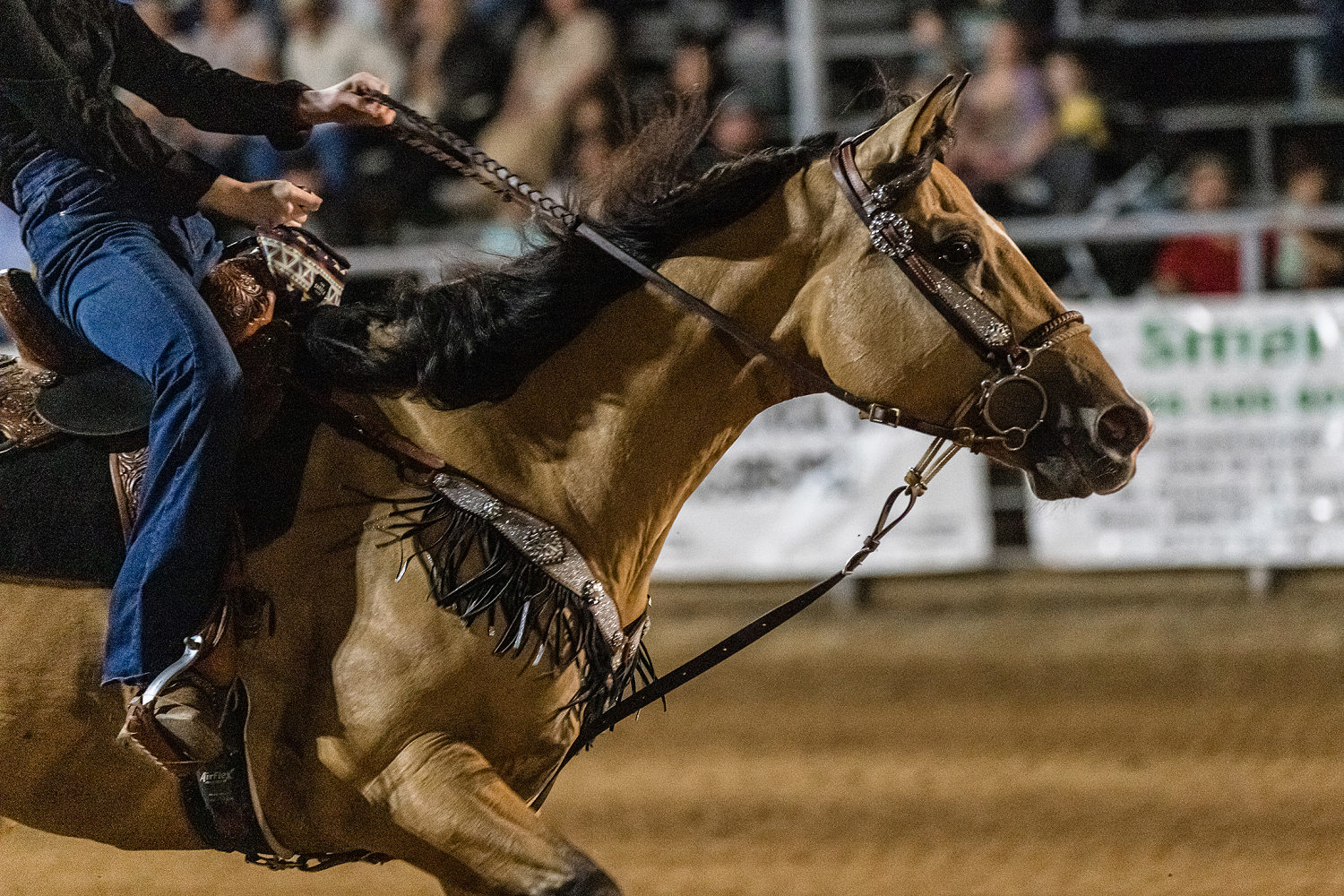
The air inside a championship arena never changes. It smells of cedar shavings, leather conditioner, and the sharp, metallic tang of nervous sweat. If you have ever stood under those blinding sodium lights, you know the pressure is an actual weight. It presses down on your shoulders, blurs the edges of your vision, and turns the crowd's roar into a muffled drone. You are alone in the dirt. Just you, and a thousand pounds of muscle beneath you.
For a teenager riding for a national title in Las Vegas, that pressure is magnified tenfold. The South Point Arena is a pressure cooker. It is where dreams are validated or crushed in a matter of seconds. But beneath the glittering surface of the equestrian world, where silver-buckled saddles gleam and silk ribbons flutter, lies a darker current. It is a culture obsessed with winning, often at any cost.
When allegations surfaced that a young competitor had intentionally harmed her horse during a major event in the desert, the industry fractured. It was not just a headline. It was a mirror held up to a sport that frequently struggles to find the line between discipline and cruelty.
The details that emerged from the Las Vegas event were not just unsettling; they were a symptom of a systemic sickness. Observers reported seeing a young rider, pushed to the brink by the expectations of the arena, taking out her frustration on the animal that was supposed to be her partner. There were whispers of excessive whipping, of spurs used not as a subtle cue, but as a weapon of compliance. The horse, a creature built for flight, was trapped between the concrete walls of the warm-up ring and the demands of its rider.
To understand how a teenager reaches this point, you have to understand the invisible stakes of the youth circuit. This is not a weekend hobby. It is an industry fueled by hundreds of thousands of dollars, parental ambition, and the relentless pursuit of prestige. Horses are bought and sold like high-performance sports cars. Trainers are paid fortunes to wring every ounce of potential out of an animal. The kids on their backs carry the financial and emotional weight of an entire entourage.
When things go wrong in the arena—when a horse refuses a jump or misses a lead change—the failure feels catastrophic. In that split second, the animal stops being a living being. It becomes an obstacle to a trophy.
Consider the physics of the relationship. A human being weighs a fraction of a horse. We have no natural physical dominance over them. The entire sport relies on a fragile psychological contract. We ask them to jump obstacles that could injure them, to slide to stops that strain their tendons, and to do it all with a appearance of willingness. That contract is built on trust. It takes years to forge and seconds to shatter.
When a rider resorts to violence, it is always an admission of defeat. It means the communication has failed completely.
The defense in these situations almost always follows a predictable script. It was a momentary lapse in judgment. The horse was being difficult. The rider was just trying to establish control. We see this pattern across all high-stakes youth sports, from gymnastics to tennis, where the line between rigorous training and abuse becomes dangerously blurred. But in equestrian sports, the victim cannot speak up. The victim cannot walk away from the coach or the parent.
The governing bodies of the sport rushed to issue statements, promising thorough investigations and reminding the public of their zero-tolerance policies regarding animal welfare. They spoke of rules, penalties, and safe sport initiatives.
But rules only matter if the culture enforces them when the cameras are turned off.
Walk through the barns at any major show at three o'clock in the morning. The public is gone. The judges are asleep. That is when the real training happens. That is where you see the heavy hands, the restrictive training devices, and the quiet desperation of horses trying to figure out what is required of them to make the pain stop. The Las Vegas incident was unique only because it happened where people could see it. It breached the perimeter of the show ground's carefully curated image.
The reaction from the equestrian community was a mix of fierce condemnation and defensive circling of the wagons. Many riders were genuinely horrified, recognizing that every instance of abuse taints the entire sport, pushing it closer to social obsolescence. Others quieted their criticism, worried about the legal ramifications or the impact on the industry's bottom line. They blamed social media for blowing the incident out of proportion. They argued that outsiders simply do not understand the realities of handling large, powerful animals.
That defense is a cop-out.
True horsemanship is not about domination. It is about a quiet, almost imperceptible conversation between two entirely different species. The greatest riders in history are the ones who look like they are doing nothing at all. Their horses seem to move by thought alone. That level of skill requires an immense amount of patience, empathy, and self-control. It requires the rider to look inward when things go wrong, to ask, "What did I do to cause this mistake?"
Instead, our current system rewards the quick fix. We want results now. We want the blue ribbon today, because the horse's value drops every year it gets older. We have created an environment where teenagers are given terrifying amounts of power over living creatures without the emotional maturity to handle it.
The young woman in Las Vegas will likely face a suspension. Her name will be whispered about in the barns for a few seasons. Her family will pay a fine, and eventually, the news cycle will move on to the next scandal. The system will protect itself, as it always does, by treating her as an isolated bad apple rather than a product of the orchard.
Meanwhile, somewhere in a darkened stall, a horse sits with its head down, ears pinned back against its skull, waiting for the sound of boots on the gravel. It does not care about national titles. It does not know the value of a silver buckle. It only understands the weight of the hand on the reins, and whether that hand offers partnership or pain.