The hallways of the Alberta Legislature building do not echo when the decisions that alter the province's future are made. They absorb the sound. Heavy carpets, thick wood paneling, and centuries of political institutionalism ensure that when a government cracks open, the public only hears the muffled thud of the pieces landing.
To the casual observer scanning a morning news feed, the update was mundane. A headline muttered about a cabinet shuffle. Premier Danielle Smith was rearranging the chairs at the decision-making table following a handful of sudden resignations. It read like standard corporate housekeeping. A spreadsheet optimization.
But politics is never about spreadsheets. It is about the friction between human ambition and the grinding gears of governance. When a minister walks away from a cabinet post, they are not just quitting a job. They are abandoning influence, prestige, and the chance to shape the physical reality of millions of citizens. They are giving up the chauffeur, the title, and the power. People do not do that because they are tired. They do that when the cost of staying becomes too heavy for their shoulders to bear.
What happened in Edmonton was not a routine bureaucratic adjustment. It was an ideological recalculation, forced by the quiet friction of backroom disagreements that finally spilled out into the light.
The Weight of the Binder
To understand what a cabinet shuffle actually means, you have to look past the press releases. Picture a newly appointed minister sitting down at a massive oak desk on their first morning. Waiting for them is a black leather binder, three inches thick. Inside that binder is the machinery of a province: infrastructure deficits, healthcare backlogs, water rights disputes, and the economic anxieties of communities whose survival depends entirely on global energy markets.
Every decision made within those pages impacts a real family. A decision to delay a hospital expansion in a rural town means an elderly man waits an extra hour in an ambulance. A change in resource allocation means a young family in Calgary calculates their mortgage payments with a tighter knot in their stomach.
When a premier shuffles that deck, the binder changes hands. The institutional memory is wiped clean, replaced by a new personality, a new set of priorities, and a new circle of advisors.
The recent departures from Smith’s inner circle were not casual exits. They represented distinct pillars of the conservative coalition that brought her to power. In politics, a cabinet is a delicate ecosystem. It requires a balance between the ideological purists who fire up the grassroots base and the pragmatic technocrats who ensure the electricity stays on and the roads get plowed. When that balance tips, the ecosystem destabilizes.
The resignations that forced Smith’s hand speak to a deeper, unspoken tension within Alberta’s political identity. It is a province caught between two powerful impulses: the desire to aggressively assert its autonomy against the federal government, and the practical necessity of managing rapid population growth, strained public services, and an economy undergoing a massive global transition.
The Anatomy of a Sudden Exit
Consider the pressure cooker of modern governance. A minister is pulled in four directions at once. Their constituents demand immediate answers for local problems. The Premier’s office demands absolute loyalty to the central message. The civil service presents mountains of data explaining why the politician's favorite ideas are logistically impossible. And the public watches every misstep on a loop, twenty-four hours a day.
When a minister resigns, it is often a sign that these competing forces have become irreconcilable.
In the weeks leading up to the shuffle, whispers of discontent had been circulating through the corridors of power. These were not loud, dramatic confrontations. They were the subtle indicators of a government under strain: a skipped committee meeting, a tense exchange during a closed-door caucus session, a policy announcement that felt strangely hollow.
When the breaking point arrived, it came swiftly. The public was presented with a polite letter of resignation, filled with standard expressions of gratitude and references to spending more time with family. It is a time-honored script.
But the true story was written between the lines. The departures created an immediate vacuum at the top of crucial portfolios. For a Premier, this is a moment of extreme vulnerability. A shuffle is a public admission that the original plan failed. It forces a leader to expose the internal hierarchy of their team, revealing who is trusted, who is being sidelined, and who is being brought in to clean up the mess.
The New Order at the Table
Danielle Smith’s response to the crisis was a tactical realignment. By moving key allies into the vacancies, she sought to signal stability while quietly tightening her grip on the government’s direction.
The new appointments tell us exactly where the administration intends to focus its energy. The individuals elevated to these high-stakes portfolios are not consensus-builders; they are finishers. They are politicians chosen for their ability to execute controversial mandates without blinking, particularly as the province prepares for deeper battles over energy policy and institutional restructuring.
But this strategy carries an immense, invisible risk.
When you fill a cabinet exclusively with like-minded loyalists, you eliminate the internal debate that keeps a government grounded. You risk creating an echo chamber where warnings from the civil service are dismissed as bureaucratic obstructionism and warning signs from the public are ignored as noise.
The newly configured cabinet faces a daunting inbox. Alberta is growing at a remarkable pace, drawing thousands of new residents from across Canada and the world, lured by the promise of affordability and economic opportunity. But that influx is colliding with infrastructure that is already stretched to its limits. Classrooms are crowded. Emergency rooms are overwhelmed. The housing market is tightening.
A shuffle does not build a single new school. It does not hire a single nurse. It merely changes the person responsible for explaining why those things haven’t happened yet.
The Long View from the Prairies
This political drama is unfolding against a backdrop of historic transformation. For generations, Alberta’s political story has been defined by its relationship with resource wealth. That wealth has provided an unparalleled standard of living, but it has also created a volatility that exposes the fragility of the province's political structures.
Every Premier of Alberta eventually discovers that the true challenge of the office is not managing the bad times, but surviving the transition between eras.
The current shuffling of the guard is a symptom of that deeper struggle. The administration is trying to navigate a world that is shifting beneath its feet, attempting to protect traditional economic engines while addressing the modern realities of a changing province. The internal friction that led to the recent resignations is a direct reflection of the broader debate happening at kitchen tables from Medicine Hat to Fort McMurray.
How much of the past should be preserved? How much of the future must be embraced?
The ministers who stepped down decided they no longer wanted to be the ones answering those questions under the glare of the television lights. The ministers who replaced them have stepped into the arena, betting their political careers that they can find the right balance.
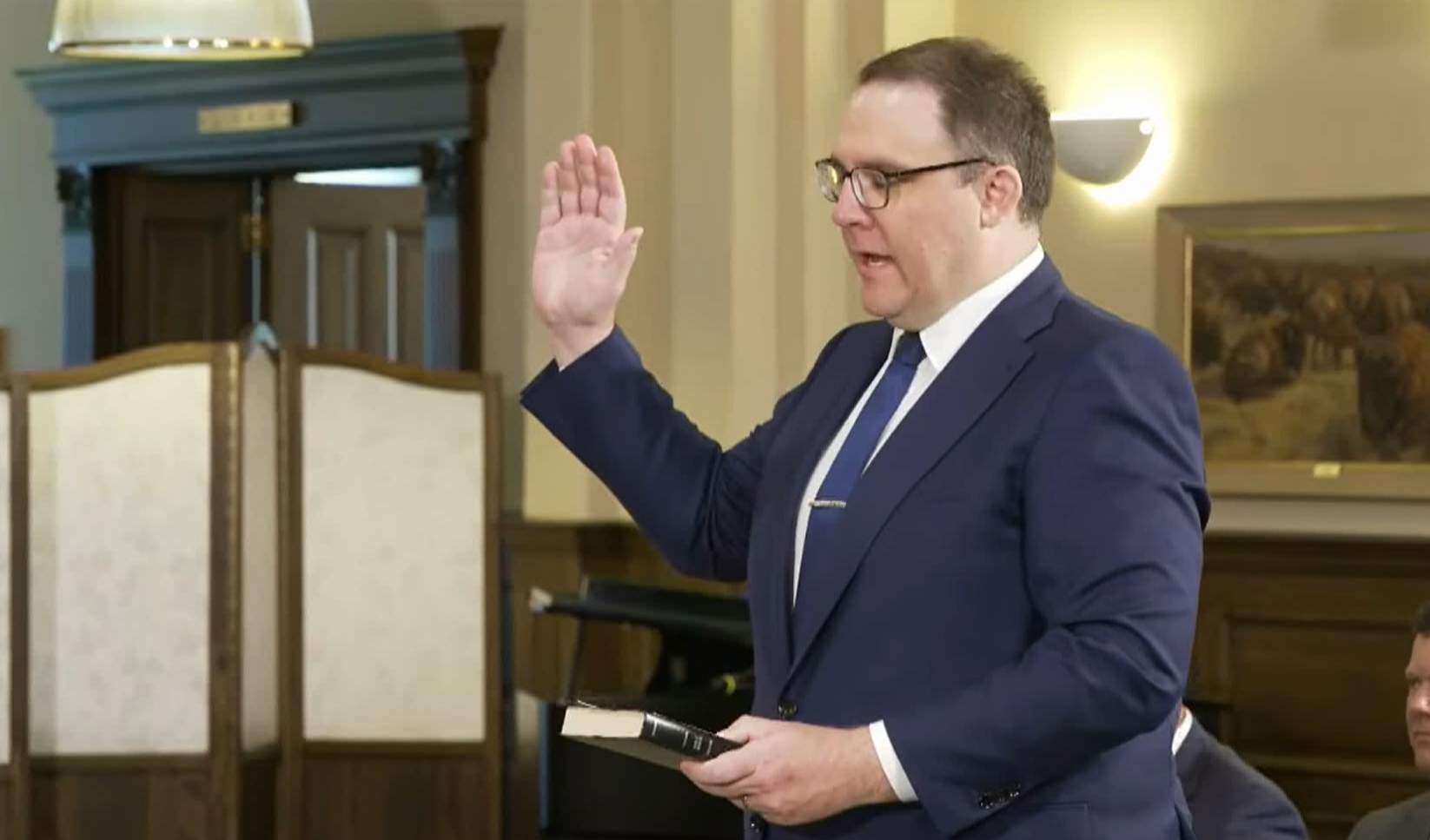
The cameras have moved on from the press conference room. The new ministers have taken their oaths, signed their paperwork, and opened those thick black binders for the first time. The true test of this new cabinet will not be found in the speeches they deliver over the coming days, but in the quiet, agonizing choices they will have to make when the room is empty, the phones are ringing, and the decisions can no longer be deferred.