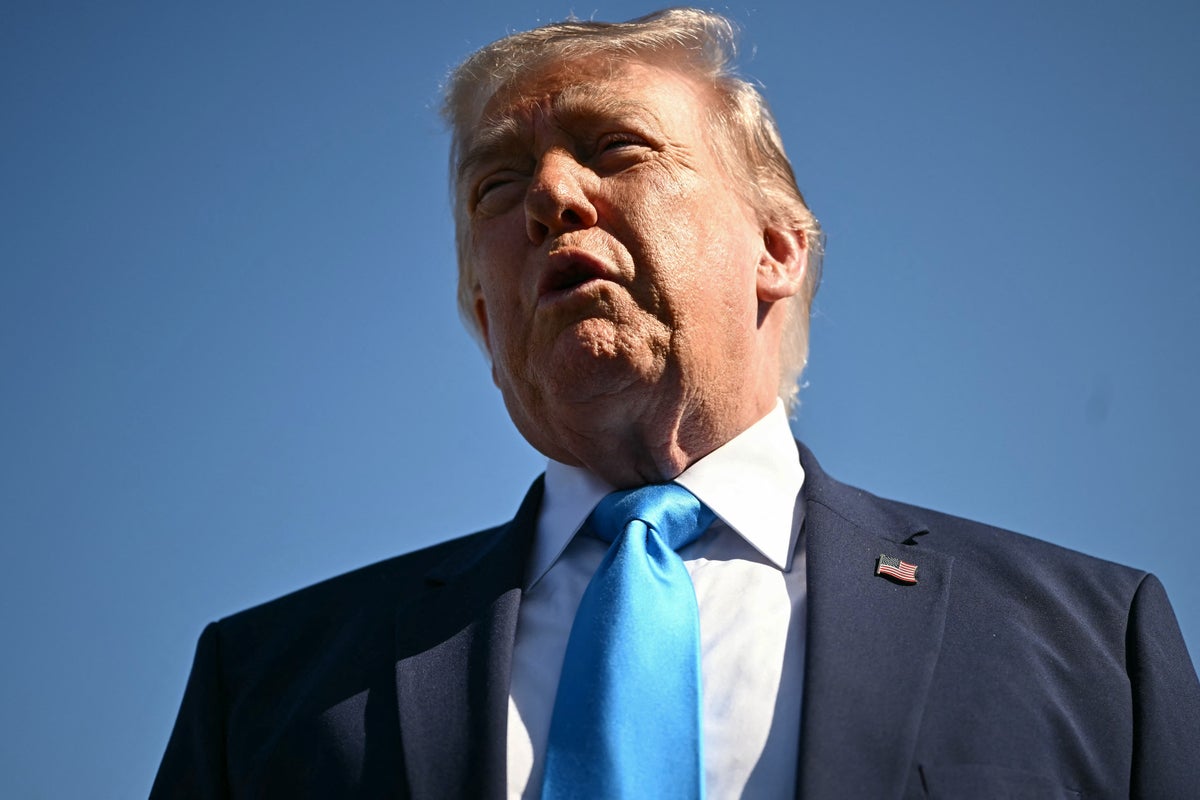
The convergence of American political power and tabloid celebrity reached its natural, absurd zenith on a tarmac this week. Asked about former MTV reality fixture Spencer Pratt running for mayor of Los Angeles, Donald Trump offered a classic rhetorical cocktail: a flash of generic praise, a swift pivoting to claims of a rigged system, and the remarkable assertion that he would have won California if Jesus Christ had descended to personally count the ballots.
Beneath the immediate shock value of invoking the divine for a bureaucratic auditing task lies a deeper structural shift in the American electoral machine. This is no longer merely about standard political theater or an isolated eccentric outburst. The modern political ecosystem has mutated to the point where the mechanics of reality television and the mechanics of running for high office are completely indistinguishable.
The traditional path to public office—building a record in local government, navigating civic coalitions, and mastering policy detail—has been systematically replaced by the monetization of attention.
The Currency of Raw Attention
For decades, political campaigns relied on institutional validation. Parties acted as gatekeepers, vetting candidates for ideological consistency, fundraising viability, and personal background. That blueprint is dead. Today, the only metric that matters is the ability to command a camera, spark a social media algorithmic wave, and sustain a permanent state of public fascination.
Spencer Pratt, who rose to fame playing a calculated villain on The Hills in the late 2000s, understands this inherently. His mayoral platform in Los Angeles centers on local recovery failures following catastrophic wildfires, but his true asset is his decades-long mastery of public provocation. He knows how to capture the lens. When Trump acknowledges a figure like Pratt as a "character" and assumes his loyalty based on a shared aesthetic of rebellion, it represents an alliance born of mutual understanding. They speak the language of modern media producers.
This reliance on pure visibility creates an environment where outrageous statements are rewarded rather than penalized. When a politician suggests that only celestial intervention could guarantee a fair vote count, the immediate instinct of traditional media is to fact-check the statement or treat it as a theological gaffe. This entirely misses the strategic point. The claim is designed to generate outrage, which in turn generates headlines, which ultimately consolidates the candidate’s position as the central protagonist in the national narrative.
How the Primary System Weaponized Fame
The structural culprit behind this shift is the evolution of the modern primary system and the digitization of campaign finance. In a fractured media ecosystem, small-dollar donors respond to high-conflict moments. The candidates who raise the most money are frequently those who can generate the highest level of online friction.
Consider how the business model of reality television functions. Producers look for cast members who reject consensus, create interpersonal conflict, and express absolute certainty regardless of the facts. This behavior drives viewership. When the political primary system was opened up to hyper-partisan voters and fueled by direct-to-consumer digital fundraising, it adopted the exact same incentive structure.
The result is a political landscape populated by performers who view governance not as a series of compromises or policy implementations, but as a multi-season broadcast. The actual work of drafting legislation or managing municipal budgets is boring; it does not translate to prime-time viewing or viral clips. A claim about a rigged election, however, provides a reliable narrative arc that keeps the audience tuned in for the next episode.
The Erosion of Institutional Trust as Product
There is a deliberate logic to the continuous attacks on electoral infrastructure. By declaring that the entire voting system in a major state like California is fundamentally dishonest, a candidate accomplishes two vital objectives for a modern media brand.
First, it creates an insular loop where any negative outcome for the candidate is automatically dismissed as a conspiracy. This protects the brand from the taint of failure. In the lexicon of reality television, a loss is never an indication of unpopularity; it is always the result of a bad edit or a production setup.
Second, it deepens the cynicism of the electorate, making them more reliant on individual personalities rather than established civic institutions. When voters lose faith in the counting process, the machinery of the state, or the neutrality of civil servants, they turn to charismatic figures who promise to transcend the broken system. The assertion that a divine figure would validate a specific political outcome is the ultimate expression of this trend. It replaces verifiable data with absolute, unarguable authority.
This development is deeply destabilizing for a democratic republic, which requires a shared agreement on basic facts to function. When the process of tabulating votes is treated as a scripted drama where the villain can simply rewrite the ending, public faith in the peaceful transfer of power dissolves. Yet, from a purely commercial standpoint, it is incredibly effective. It ensures that the news cycle revolves entirely around the provocateur, forcing opponents to spend valuable time reacting to absurdity rather than putting forward competing visions for governance.
Moving Beyond the Spectacle
Fixing a political culture that has been swallowed by the logic of entertainment cannot be achieved through simple condemnation. Fact-checking a performance does nothing to diminish its appeal to an audience that has already tuned out traditional institutional authorities.
The real solution requires a cold-eyed assessment of how attention is rewarded in American civic life. Until political parties reclaim their roles as serious vetting institutions, and until campaign finance structures stop favoring hyper-polarized media events, the line between the reality studio and the halls of government will continue to blur. The spectacle will grow larger, the rhetoric will become more untethered from reality, and the line between public service and performance art will vanish entirely.
To better understand the historical evolution of how entertainment strategies came to dominate national campaigns, the report Donald Trump claims he would have won California if Jesus counted the votes provides immediate context on the specific rhetorical patterns used to bypass traditional media scrutiny.