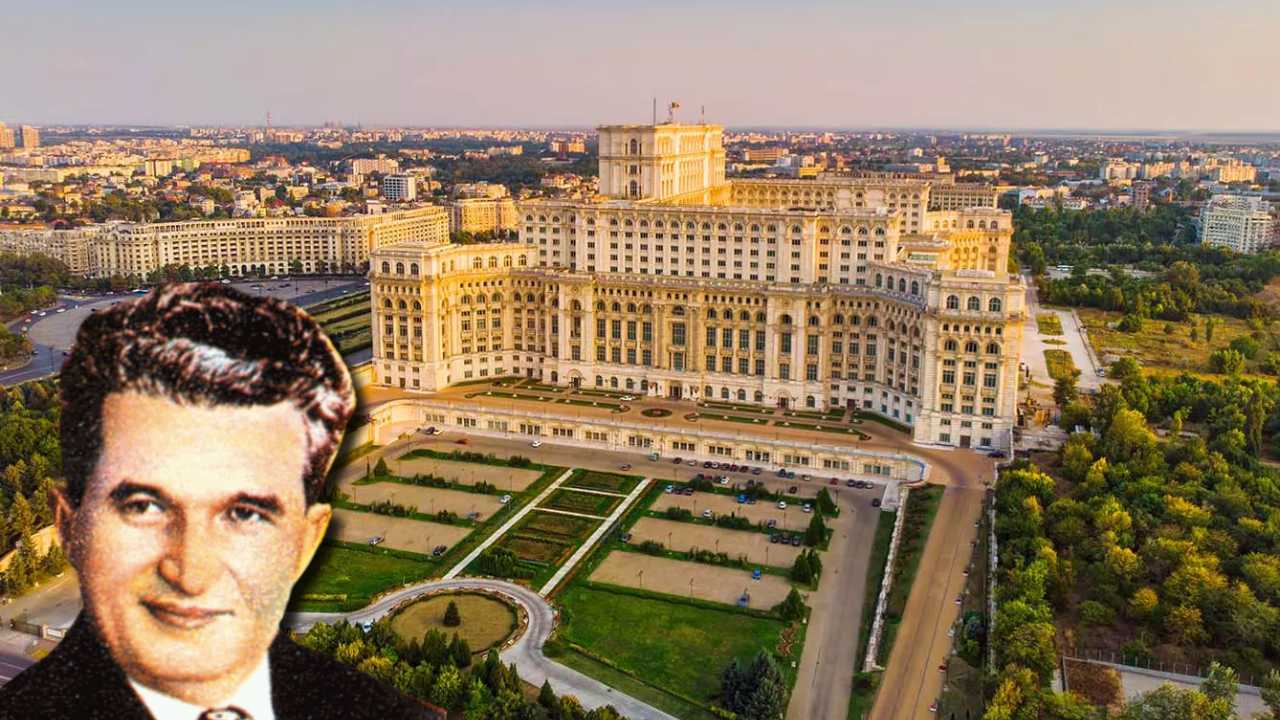
The lazy consensus on Bucharest’s colossal House of the Republic—now known as the Palace of the Parliament—follows a predictable script. Tourist blogs and architecture columns lament the tragedy of a historic neighborhood bulldozed, the displacement of tens of thousands, and the megalomaniacal ego of a dictator who bled an entire nation dry to build the heaviest civilian administrative building on Earth.
It is a neat, emotionally satisfying narrative. It is also historically lazy and fundamentally misses the brutal economic and geopolitical reality of state-sponsored construction in the late twentieth century. For a closer look into this area, we suggest: this related article.
I have walked through the labyrinthine corridors of this monolithic structure, counted the marble slabs, and examined the structural logic that people love to reduce to a cartoonish villain’s lair. When you strip away the moral outrage, a far more provocative truth emerges: the Palace of the Parliament is not just a monument to tyranny. It is an enduring masterclass in absolute domestic resource mobilization and import substitution that modern infrastructure projects, paralyzed by bureaucratic red tape and global supply chain dependencies, could only dream of executing.
Let us dismantle the prevailing mythology immediately. For broader background on the matter, in-depth coverage can be read at Travel + Leisure.
The Myth of Total Ruin and Inefficiency
The standard critique claims that Nicolae Ceaușescu destroyed a vibrant, irreplaceable urban fabric out of pure caprice. The Uranus neighborhood, a historic district of low-rise homes and churches, was indeed flattened. But framing this solely as an act of senseless vandalism ignores the catalyst. In 1977, a magnitude 7.4 earthquake devastated Bucharest, killing over 1,500 people and rendering swaths of the capital structurally unsafe. The city was already broken.
Ceaușescu did not invent the impulse to wipe the slate clean; he merely weaponized a national tragedy to execute a brutal urban consolidation. Dictatorships do not operate by committee, which is precisely why this building exists at all. Imagine a scenario where a modern democratic government tries to acquire seven square kilometers of prime urban land in a capital city today. Environmental impact statements, zoning disputes, eminent domain litigation, and municipal budgeting would stall the project for half a century, inflating costs by ten thousand percent.
The Romanian state bypassed the friction. Was it humane? Absolutely not. Was it efficient at bending physical matter to human will? Unquestionably.
The Autarky Paradox
Critics love to point out that the construction of the palace coincided with severe domestic austerity, food rationing, and the export of agricultural goods to pay off foreign debt. This is true, but it obscures an economic detail that rarely makes it into the travel guides: everything inside the building is domestic.
Chief architect Anca Petrescu enforced an ironclad rule. Every single brick, crystal chandelier, marble block, and wool carpet had to be sourced and manufactured within Romania. Only the wooden doors of one ceremonial hall came from abroad, sent as a diplomatic gift.
In our current era of globalized supply chains, where a single geopolitical hiccup halts manufacturing lines, the Palace of the Parliament stands as an extreme monument to complete supply chain autarky. It proves that a nation can construct a 365,000-square-meter edifice using solely its own natural resources and domestic labor pool, without relying on foreign conglomerates. The human cost of that self-sufficiency was catastrophic, but the engineering feat itself remains an undeniable testament to total industrial independence.
Reclaiming the White Elephant
Today, the building is frequently dismissed as a white elephant—a half-empty, over-heated behemoth that drains public coffers to maintain. People ask why the post-communist government didn't just tear it down.
The answer is simple math: demolition would cost more than completion. With a weight estimated at over 4 million tonnes, the structure is physically impossible to erase efficiently. It is easier to re-engineer its purpose. Today, it houses the Romanian Parliament, the Constitutional Court, conference centers, and contemporary art museums. It generates millions in tourism revenue and functions as a multi-use civic anchor.
Stop viewing the building through the lens of a morality play. It is a geological anomaly masquerading as architecture—a structure so heavy it sinks millimeters into the earth every year, not because it was built poorly, but because the Earth itself is struggling to support the sheer concentration of human ambition.
Next time you look at a modern skyscraper delayed by material shortages and municipal committees, remember the concrete giant on Dealul Arsenalului. It was built on a foundation of immense suffering, but it was built.
And it is not going anywhere.
The Terrible Story of the Palace of the Parliament in Bucharest, the Heaviest Building in the World
This video provides an overview of the construction and historical context behind the world's heaviest administrative building.
http://googleusercontent.com/youtube_content/1