The headlines are screaming about a "shutdown" in the Strait of Hormuz. Pundits are dusting off 1970s oil shock charts. They point to a 20% or 30% drop in visible tanker pings and declare a global energy apocalypse.
They are wrong.
What we are witnessing isn't a collapse of trade. It is the sophisticated evolution of "dark" logistics. While armchair analysts watch public tracking data and panic, the real players—the ones moving the world’s crude and liquid natural gas—are simply turning off the lights. The Strait of Hormuz isn't a bottleneck; it’s a masterclass in obfuscation.
The AIS Fallacy
The "lazy consensus" relies almost entirely on Automatic Identification System (AIS) data. If a ship stops broadcasting its position, the data-crunchers at the big news desks assume it has stopped moving.
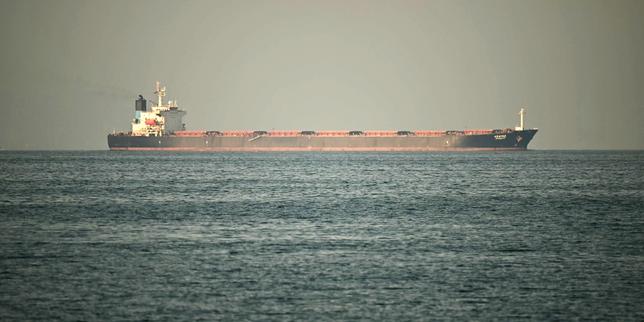
I have spent fifteen years watching maritime insurance adjusters navigate these waters. Here is the reality: AIS is a suggestion, not a law, when missiles start flying. When a tanker enters a high-risk zone, the first thing the captain does is "go dark." They aren't sinking. They aren't anchored in Dubai waiting for a hug. They are hugging the Omani coastline or weaving through territorial waters where satellite radar has a harder time distinguishing a 300-meter VLCC (Very Large Crude Carrier) from coastal clutter.
To say traffic has "plummeted" because pings have decreased is like saying a city has disappeared because everyone turned off their porch lights. The oil is still flowing. The ships are still moving. They just don't want to be on your dashboard.
Why Carriers Want You to Panic
There is a dirty secret in the shipping industry: volatility is a profit center.
When a "crisis" hits the Strait, "War Risk" premiums skyrocket. This allows carriers to trigger Force Majeure clauses or apply emergency surcharges that far exceed the actual increase in operational costs. If you are a global logistics firm, a quiet, safe Strait is a low-margin Strait. A "dangerous" Strait is where you make your year's bonus in a single quarter.
- The Insurance Grift: Insurers hike rates by 500% based on "heightened tension."
- The Fuel Surcharge: Carriers pass on "rerouting costs" even for ships that never actually changed their path.
- The Scarcity Play: By signaling a "drop" in traffic, they justify price hikes at the pump and the port, despite global inventories being well-buffered.
I’ve seen manifests where "security fees" were tacked onto shipments that were already 200 miles clear of the danger zone before the first drone even launched. The panic is the product.
The Physical Impossibility of a Total Blockade
Let's dismantle the biggest myth of all: that Iran, or anyone else, can "close" the Strait.
The Strait of Hormuz is approximately 21 miles wide at its narrowest point. However, the shipping lanes (the Traffic Separation Scheme) consist of two-mile-wide inbound and outbound lanes, separated by a two-mile buffer zone.
To actually "block" this, you would need to sink dozens of massive vessels with surgical precision in a very specific, shallow-draft area. Even then, the Persian Gulf is not a bathtub. You can go around. Modern dredging and the sheer depth of the surrounding waters mean that "blocking" the Strait is a cinematic fantasy, not a naval reality.
Furthermore, the Iranians are not suicidal. They are the world's most experienced practitioners of "gray zone" warfare. They know that a total blockage triggers a global kinetic response that ends their regime. They prefer the "managed threat"—a slow drip of tension that keeps oil prices high enough to fund their proxies but low enough to avoid a carrier strike group turning Tehran into a parking lot.
The Tanker Paradox
The mainstream media loves the "Supply Chain Fragility" narrative. It's easy to digest. But they ignore the Tanker Paradox: high-risk environments actually increase the efficiency of the "shadow fleet."
There are currently hundreds of vessels—mostly aging hulls owned by shell companies in jurisdictions you couldn't find on a map—that exist solely to move sanctioned oil. For these captains, an "attack" in the Strait is just Tuesday. They operate outside the Western insurance umbrella. They use "spoofing" technology to make their GPS coordinates appear as if they are sitting in the middle of the Indian Ocean while they are actually loading crude at Kharg Island.
When "official" traffic drops, the shadow fleet’s market share grows. This isn't a disruption; it's a redistribution of wealth from transparent, regulated entities to the underworld of global trade.
The Math of Energy Independence
If you’re still worried about 1973-style gas lines, you haven't looked at a balance sheet lately. The U.S. is a net exporter of crude. The "threat" to the American consumer from a Hormuz hiccup is largely psychological and driven by algorithmic trading bots that sell on every headline containing the word "attack."
The real victims of a Hormuz squeeze aren't in New York or London. They are in Beijing and New Delhi. China imports roughly 75% of its oil, a massive portion of which comes through that 21-mile gap. If you want to know if the situation is truly dire, stop watching the Pentagon. Watch the Chinese Ministry of Foreign Affairs. If they aren't screaming, the oil is moving.
How to Actually Navigate the Noise
If you want to understand the reality of maritime risk, stop looking at "vessel counts." Start looking at Demurrage Rates and Clean Tanker Fixtures.
- Ignore the "Traffic is Down" Graphs: These are almost always based on unverified AIS data. They miss the dark ships and the coastal bypasses.
- Watch the Re-exports: Look at the bunkering activity in Fujairah. If ships are still refueling there, the trade hasn't stopped; it's just changed its signature.
- Follow the Insurance Arbitrage: The moment the "big three" Lloyd’s syndicates stop writing policies entirely—not just raising prices, but refusing coverage—that is when you panic. Until then, it's just a negotiation.
The Strait of Hormuz is the world's most profitable theater. The actors are naval vessels, the script is written by geopolitical hawks, and the audience is a terrified public that pays for the performance at the gas pump.
The next time you see a chart showing ship traffic "plummeting," remember: the most dangerous thing in the water isn't a missile. It's a spreadsheet designed to make you think the world is ending so someone else can charge you a "risk premium" for the air you breathe.
Stop looking for the pings. Start looking for the ghosts. They’re the ones making all the money.