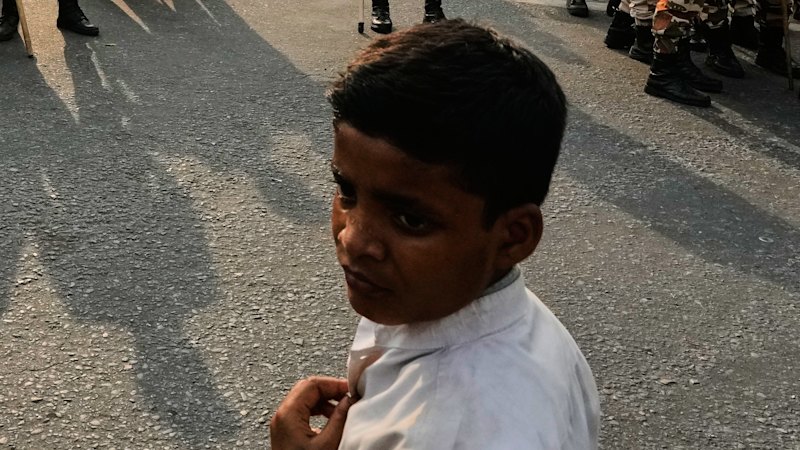
The barricades did not arrive with a warning. They arrived in the dark, hauled off flatbeds by men in heavy boots who spoke in clipped, low tones. By dawn, the arteries of the city had hardened. Steel fences sliced across wide boulevards. Razor wire coiled tight against concrete medians, gleaming dully under the early morning haze.
Security checkpoints choked the intersections. Transit hubs emptied out, reduced to echoing halls of hurried footsteps and nervous glances. For a different view, read: this related article.
To an outsider, the heavy police presence suggested an impending natural disaster or an invisible foreign threat. But the capital was bracing itself for something far more fragile and unpredictable. A generation of youth stepping out into the sun, armed with little more than a metaphor.
They called themselves cockroaches. Similar insight on this matter has been provided by TIME.
It was a deliberate, stinging reclamation of a slur, an ironic badge of survival worn by young people who felt crushed under the boots of systemic neglect, staggering unemployment, and evaporating futures. If the powerful viewed them as pests scuttling in the margins, they would own the label. They would multiply in the shadows. They would crawl out into the light where no one could look away.
Consider the weight carried by a twenty-two-year-old graduate holding a diploma that functioned as little more than an expensive receipt for a broken promise. For months, the frustration had simmered in cramped rooms, across pixelated group chats, and in the quiet desperation of tea stalls where job listings were checked with a mixture of hope and exhaustion.
When the official channels close, the streets remain.
The state machinery moved with absolute, preemptive precision. Subway stations were shuttered. Mobile internet signals flickered and died in targeted sectors, plunging neighborhoods into digital isolation. Authorities mobilized thousands of security personnel, turning the urban landscape into an armed encampment. Every corner held a squad car. Every park perimeter was watched.
Fear is a powerful architect. It builds walls quickly.
Yet tension possesses a strange physics. The more pressure applied to a sealed container, the faster the internal heat rises.
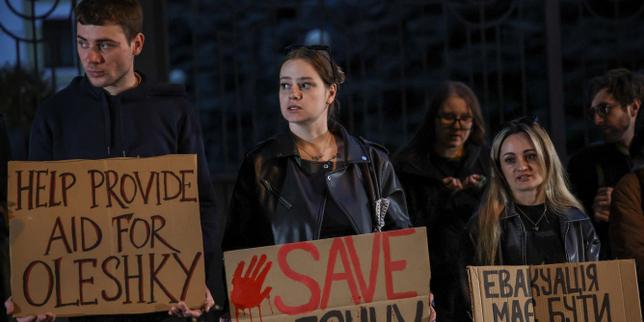
By mid-morning, small clusters of demonstrators began to materialize in defiance of the lockdown. They did not arrive in massive, organized columns with banners flying high. They drifted in like smoke. A handful here on a side street. A dozen stepping off a bus three blocks away from the main square.
They moved with an urgent, nervous energy. Many wore simple black clothing, their faces half-concealed by cloth masks, not merely for anonymity, but as a universal shield against the stinging haze of tear gas they knew was waiting for them.
A young woman named Priya stood near a shuttered storefront, clutching a small bottle of water and a damp cloth. She was twenty-four, trained in data entry, and currently employed part-time at a local bakery that barely paid enough for rent.
"They think closing the roads stops us," she whispered, her eyes darting toward a phalanx of riot police stationed fifty yards away. "They don't understand that we live here. We know the alleys. We know the shortcuts. We are already everywhere."
Her voice didn't tremble, though her hands did. That juxtaposition—fragile human vulnerability colliding with unbreakable resolve—defined the morning.
When the first chants broke out, they were ragged and hesitant, echoing off the concrete facades of closed shops before finding a collective rhythm. The sound carried down narrow alleyways, slipping past the barricades, mocking the multi-layered security grid designed to contain it.
Law enforcement responded with swift, mechanical inevitability. Batons struck shields. Sirens wailed, bouncing off glass towers. The air grew thick with the acrid scent of burning rubber and chemical irritants. People scattered, ducking into doorways, leaping over low courtyard walls, only to regroup twenty minutes later a block over.
The protest was less a singular event and more an urban ghost dance. Every time the authorities swept a plaza clean, another group appeared elsewhere, chanting slogans that questioned the very foundations of the social contract.
History teaches us that a government can blockade physical territory, but it cannot easily cordon off despair. When an entire generation concludes that it has nothing left to lose, the calculus of power shifts. Fear loses its currency. Tear gas becomes a temporary inconvenience.
As the sun began to dip below the skyline, casting long, bruised shadows across the barricaded avenues, the city remained locked in a tense standoff. The streets were technically quiet, cleared of traffic and civilian life, but the quiet was deceptive. It was the heavy, breathless silence that settles over a forest floor right before a sudden, violent shift in the weather.
In the dimming light, a lone flyer fluttered down the steps of an overpass, caught in a stray gust of wind. Printed across the cheap paper was a simple, stark image of a dark insect, paired with words that refused to stay buried in the dark.
The barricades will come down eventually. The rust will eat the steel. But the generation that learned how to navigate the maze will remain, waiting in the margins, breathing.