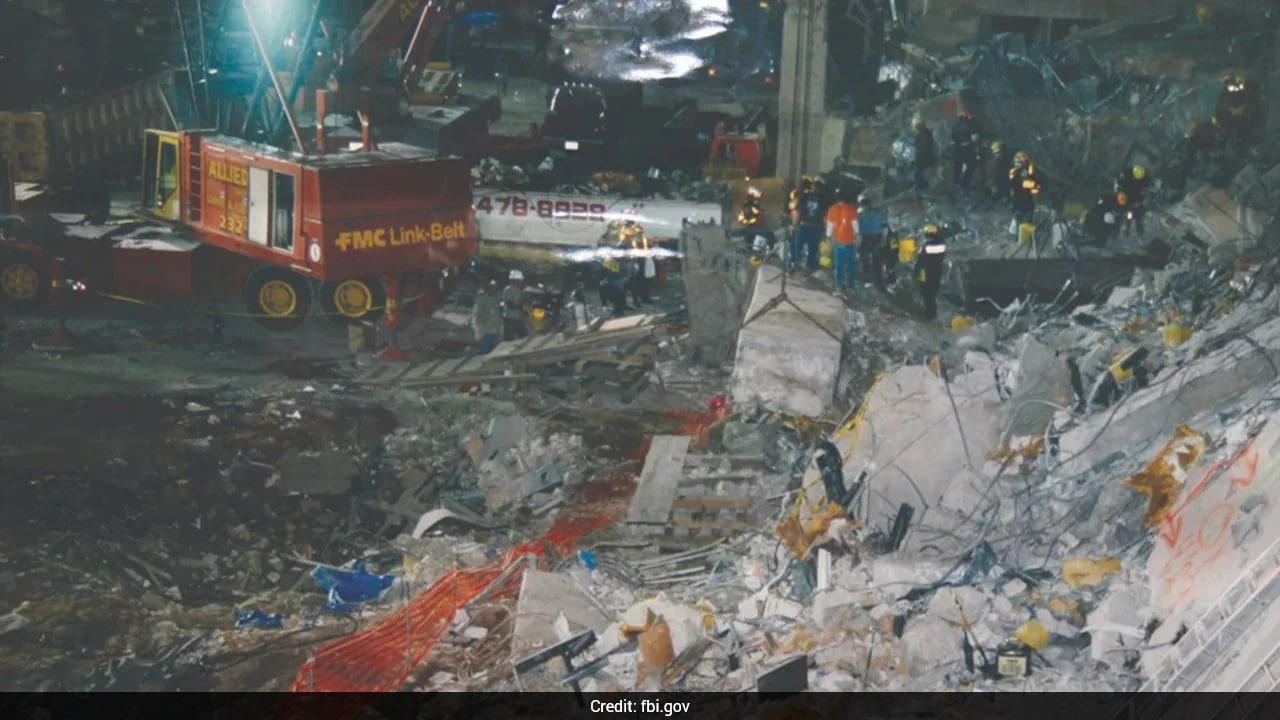
On February 26, 1993, at 12:18 PM, a commercially rented Ryder van containing roughly 1,500 pounds of urea nitrate-hydrogen gas enhanced explosive devices detonated in the sub-grade B-2 parking garage of the World Trade Center North Tower. The strategic objective defined by mastermind Ramzi Yousef was structural cascading: to cause the North Tower to topple into the South Tower, resulting in simultaneous collapse and mass casualties.
While the structural collapse mechanism failed, the operational parameters, engineering vulnerabilities, and institutional blind spots established a foundational blueprint for modern urban vulnerability analysis. Understanding this event requires stripping away narrative sensationalism and evaluating the physical mechanics, security architecture economics, and investigative workflows that governed the incident.
The Physical Mechanics and Structural Failure Envelope
The physics of the 1993 attack centered on kinetic energy translation within a confined subterranean concrete environment. The device, composed primarily of urea nitrate mixed with aluminum, magnesium, and ferric oxide, was engineered to maximize brisance—the shattering velocity of an explosive—rather than mere incendiary expansion.
When the device detonated, it excavated a crater spanning several sub-grade levels (B-1 through B-4), destroying critical structural steel load-bearing elements, including a 15-foot-long, 1.5-inch-thick steel cross-bracing section, and bowing adjacent primary columns. However, the building stayed upright due to structural redundancy and load redistribution across the remaining core columns.
The primary vector of failure was not the direct demolition of the steel skeleton, but the systemic disruption of utility infrastructure. The blast severed the complex's main electrical power lines, completely knocking out emergency lighting, primary water feeds, and the building management systems.
Without power, mechanical ventilation systems failed. This transformed the unpressurized stairwells into vertical chimney flues. Toxic smoke and particulate matter migrated upward through open elevator shafts and stairwells, reaching the 93rd floor. The resulting casualties—six fatalities and over 1,000 injuries—were overwhelmingly driven by smoke inhalation and evacuation bottlenecks rather than direct blast trauma.
The Economic Cost Function of Subterranean Parking
Security design in commercial real estate operates on an inherent friction between revenue optimization and threat mitigation. In the early 1990s, the Port Authority of New York and New Jersey operated the World Trade Center sub-grade parking facility as a public, transient asset.
The economic cost function driving this operational model prioritized maximum daily vehicle turnover and parking revenue over access control. Proposals to restrict transient parking or implement rigorous under-vehicle inspection protocols were systematically rejected due to projected revenue losses and traffic throughput constraints.
This economic calculus created an exploitable vulnerability window. Ramzi Yousef and his co-conspirators did not require sophisticated intelligence infiltration; they simply exploited the public-access architecture of the garage. By driving the van directly into the B-2 level without challenge, they bypassed perimeter defense layers that would have been mandatory for sensitive federal assets.
The security failure demonstrated a core principle of infrastructure risk: when an asset mixes high-value public accessibility with high-consequence density, any optimization favoring convenience over access control introduces a catastrophic tail risk. Following the 1993 incident, commercial real estate developers were forced to recalculate this cost function, permanently altering urban parking security economics.
The Information Asymmetry and Investigative Pivot
The identification and apprehension of the conspirators relied on an investigative pivot that exploited operational security failures within the cell. Ramzi Yousef's tactical execution was rigorous, but his administrative follow-through introduced fatal evidentiary traces.
The investigation turned on a microscopic physical recovery: a fragment of the Ryder van axle bearing the Vehicle Identification Number (VIN), which survived the blast because it was embedded downward into the concrete slab. Tracing this VIN to a Jersey City rental agency exposed the operational loop of Mohammed Salameh, who had returned to the agency hours after the bombing to report the van stolen in an attempt to recover his $400 cash deposit.
This dynamic highlights a frequent vulnerability in decentralized operational cells: the friction between tactical discipline and individual financial optimization. Salameh's prioritization of a minor monetary deposit compromised the operational anonymity of the entire network.
Concurrently, the handling of preliminary intelligence prior to the attack demonstrated systemic breakdowns in inter-agency communication. Documents recovered from co-conspirator caches, alongside pre-attack warnings provided by informants like Emad Salem, revealed that federal and local authorities possessed fragmented indicators of an impending strike. The failure was structural: intelligence stovepiping prevented tactical threat integration between immigration screening (highlighted by Ahmed Ajaj’s arrest at JFK Airport carrying bomb-making manuals weeks prior) and local law enforcement protective postures.
Systemic Vulnerability Remediation
To eliminate the recurrence of subterranean infrastructure vulnerabilities identified in 1993, modern enterprise security architecture mandates a tripartite defense framework:
- Perimeter Hardening: Implementation of blast-mitigating structural barriers, steel-reinforced architectural shrouds, and hydraulic wedge bollards capable of arresting high-mass kinetic vehicle impacts prior to reaching structural columns.
- Access Control Friction: Elimination of anonymous transient parking beneath critical structures through mandatory biometric or electronic credentialing, coupled with automated license plate recognition and under-vehicle imaging systems at all ingress points.
- Environmental Life-Safety Isolation: Upgrading emergency power systems with independent, fuel-isolated generators, coupled with pressurized stairwells and compartmentalized smoke-purge mechanisms to maintain habitable egress corridors during a structural compromise.
Executing these defenses shifts the baseline security posture from reactive forensics to proactive threat containment, ensuring that subterranean vulnerabilities cannot be leveraged for cascading structural failures.