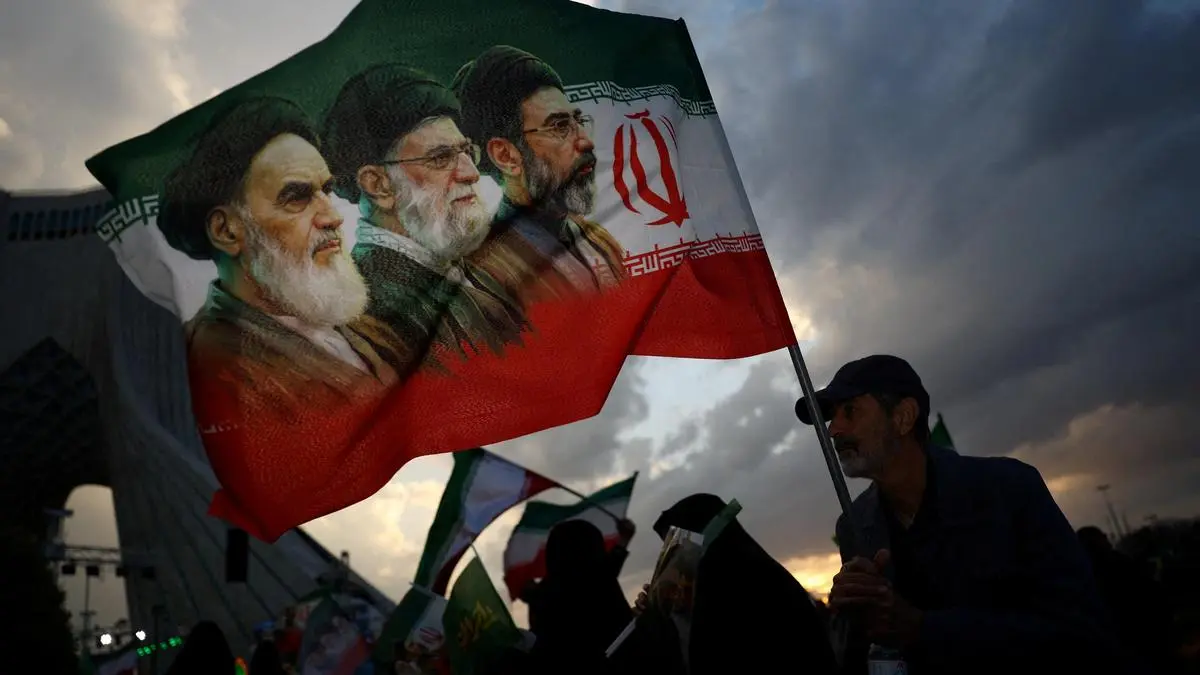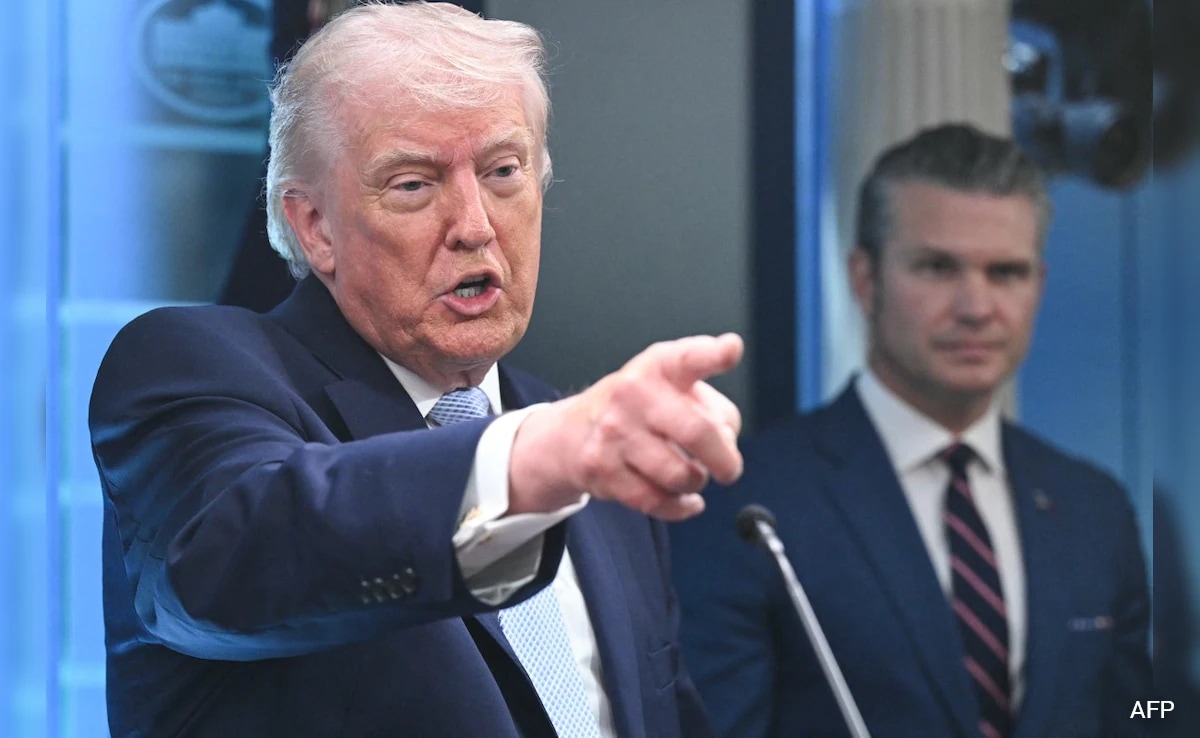
The failure of "Maximum Pressure" to secure a definitive diplomatic or nuclear concession from Tehran stems not from a lack of intent, but from a fundamental misalignment between economic attrition and political willpower. To evaluate why a shift toward de-escalation occurs, one must map the three structural friction points that limit the effectiveness of unilateral sanctions: the threshold of internal regime resilience, the emergence of parallel trade ecosystems, and the diminishing marginal utility of coercive threats. When the costs of maintaining a hardline stance begin to outweigh the domestic or geopolitical returns, a strategic "U-turn" is not an inconsistency; it is a rational recalibration to avoid a low-probability, high-consequence kinetic conflict.
The Triad of Deterrence Erosion
Deterrence functions as a psychological calculation where the target perceives the cost of defiance as higher than the cost of compliance. In the context of U.S.-Iran relations, this calculation broke down because the Iranian leadership viewed the cost of compliance—specifically the permanent dismantling of regional influence and nuclear infrastructure—as an existential threat to the state itself.
1. The Threshold of Regime Resilience
Economic sanctions operate on the assumption that popularized suffering translates into political change. However, autocratic structures utilize a command-and-control distribution of remaining resources to prioritize the security apparatus. By concentrating the available capital within the Islamic Revolutionary Guard Corps (IRGC) and associated bonyads (charitable trusts), the state ensures that the segments of society capable of challenging the regime remain funded, even as the general populace experiences triple-digit inflation. This creates a disconnect where the macroeconomic "pain" measured by Western analysts does not reach the micro-level of regime stability.
2. Parallel Trade Ecosystems and Circumvention
Sanctions efficacy degrades over time as markets adapt. Iran’s pivot to the East—specifically the strengthening of the "dark fleet" oil tanker network and the formalization of trade with China and Russia—has provided a vital liquidity floor. China’s willingness to purchase discounted Iranian crude, often settled in non-dollar currencies or through barter systems, effectively neuters the "Maximum" in Maximum Pressure. Once a target nation establishes a secondary financial infrastructure that operates outside the SWIFT system, the primary sanctioning power loses its most potent lever of influence: the threat of financial isolation.
3. The Paradox of Kinetic Escalation
The threat of military force is only a viable lever if the threat is credible and the user is willing to bear the cost of execution. As tensions peaked with the 2020 assassination of Qasem Soleimani, the subsequent Iranian response demonstrated a willingness to engage in direct, albeit calibrated, military retaliation. For the United States, the risk of a full-scale regional war—which would disrupt global energy markets and necessitate a massive troop deployment—created a "deterrence trap." The U.S. could not escalate further without risking a catastrophe that would undermine its own domestic political stability, giving Iran a tactical space to continue its activities just below the threshold of total war.
The Cost Function of Persistent Hostility
Maintaining a state of permanent high-tension diplomacy incurs specific systemic costs that eventually force a policy shift. These are not emotional choices but responses to shifts in the global power balance.
Strategic Overextension
Every carrier strike group deployed to the Persian Gulf is a resource unavailable for the Indo-Pacific or Eastern Europe. As the U.S. National Defense Strategy shifted toward "Great Power Competition," the ongoing stalemate with Iran became a strategic drain. The U.S. military-industrial complex and logistical frameworks have finite bandwidth; a U-turn represents the pruning of a secondary theater to focus on primary threats like China’s naval expansion or Russian territorial aggression.
The Breakdown of Multilateralism
Unilateral sanctions create friction with allies. When the U.S. withdrew from the Joint Comprehensive Plan of Action (JCPOA), it created a rift with the E3 (United Kingdom, France, and Germany). Secondary sanctions, which punish third-party countries for trading with Iran, essentially force allies to choose between their sovereignty and their relationship with the U.S. Treasury. Over time, this erodes the legitimacy of the dollar-based financial system, as allies begin developing mechanisms like INSTEX to bypass U.S. jurisdictions. A shift toward negotiation is often a move to repair these alliances and restore a unified diplomatic front.
Quantitative Divergence: Sanctions vs. Enrichment
The most objective metric of the "U-turn" is the disparity between economic indicators and nuclear development. If the goal of pressure was to stop nuclear progress, the data suggests the opposite occurred.
- Enrichment Levels: Prior to the withdrawal from the JCPOA, Iran’s uranium enrichment was capped at 3.67%. Post-withdrawal, and in response to the pressure campaign, enrichment jumped to 20% and eventually 60%, bringing the breakout time for a nuclear weapon from one year down to weeks.
- Centrifuge Technology: Pressure incentivized Iran to accelerate the deployment of IR-6 and IR-8 advanced centrifuges, which are significantly more efficient than the older IR-1 models.
- Regional Proliferation: Despite restricted cash flow, Iranian proxy activities in Yemen, Lebanon, and Iraq did not cease; they became more cost-effective. The transition to low-cost, high-impact technologies like kamikaze drones (Shahed series) allowed Iran to maintain its regional reach on a fraction of its former budget.
The Pivot to "De-Risking" Diplomacy
The shift from total pressure to a more nuanced engagement—often characterized by critics as a "U-turn"—is actually an attempt at "de-risking." This framework prioritizes the prevention of the worst-case scenario (nuclear breakout or regional war) over the achievement of the best-case scenario (total regime capitulation).
Informal Agreements and "Grey Zone" Stability
Rather than a formal treaty, which would face insurmountable hurdles in the U.S. Senate, the current strategy focuses on informal understandings. These involve "freezing" Iranian enrichment in exchange for the release of frozen assets or humanitarian waivers. This allows both sides to lower the temperature without losing political face. It is a management strategy rather than a resolution strategy.
The Role of Middle-Power Intermediaries
The emergence of regional actors like Qatar, Oman, and even the recent rapprochement between Saudi Arabia and Iran mediated by China, has changed the landscape. These nations provide "off-ramps" that allow for communication without direct diplomatic recognition. The U.S. leverages these channels to manage the Iranian file while focusing on broader regional integration projects like the Abraham Accords or the IMEC corridor.
Limitations of the Re-Engagement Model
While de-escalation reduces the immediate risk of war, it carries its own set of structural vulnerabilities that must be quantified.
- The Sunk Cost of Sanctions: Once sanctions are lifted or softened, reimposing them (the "snapback" mechanism) is significantly harder, as the global market has already reintegrated the target.
- Incentivizing Asymmetric Leverage: By rewarding de-escalation with asset releases, the U.S. inadvertently signals that taking hostages or increasing enrichment is a valid way to generate bargaining chips.
- Domestic Political Volatility: In both Washington and Tehran, hardline factions view any compromise as a betrayal. This makes any progress fragile and easily reversible by a change in administration or a single security incident in the Persian Gulf.
Strategic Forecast
The future of U.S.-Iran relations will not be defined by a grand bargain or a total war, but by a "managed stalemate." The U.S. has reached the limit of what economic leverage can achieve in a multipolar world where the dollar's dominance is contested. Iran, conversely, has reached the limit of what its "Resistance" economy can bear without risking internal collapse due to systemic mismanagement and environmental crises.
The strategic play for the United States is to move away from the binary of "War vs. Peace" and toward a "Constainment" model. This involves:
- Establishing clear, red-line boundaries regarding enrichment levels (specifically the 90% weapons-grade threshold) that trigger immediate, predetermined kinetic responses.
- Shifting the focus from broad-based economic sanctions to "surgical" sanctions that target the specific supply chains of missile and drone technology, which are easier to track and harder to circumvent than oil sales.
- Formalizing the role of regional allies in the security architecture, effectively "outsourcing" the day-to-day containment of Iranian influence to a coalition of Gulf states and Israel.
This transition from an offensive "Maximum Pressure" campaign to a defensive "Integrated Containment" strategy is the logical conclusion of the last decade’s failures. It acknowledges that while the U.S. can damage the Iranian economy, it cannot dictate the political reality of the Middle East through financial coercion alone. The U-turn is the sound of the brakes being applied before the vehicle hits the wall of geopolitical reality.