A deadly encounter on a Madison street has sparked intense public outrage, political friction, and renewed calls for answers across Wisconsin. When a police officer fatally shoots a suspect in broad daylight, the public demands immediate clarity. Yet clarity is rarely simple when witness videos, missing body camera footage, and high-stress encounters collide.
On July 22, 2026, a Madison police officer shot and killed a man in his 30s in the Marquette neighborhood, less than two miles from the state Capitol. Officers responded to reports of a suspect checking door handles on parked cars. The suspect fled on a bicycle, leading officers through backyards before they caught up with him on a city street.
What happened next lasted only seconds, but it left a man dead, an officer injured, and an entire community demanding accountability.
What Happened on Willy Street
Eyewitnesses and cellphone recordings captured portions of the struggle. Officers attempted to detain the man after he either fell or was pulled from his bicycle. During the physical altercation, police say the man produced a fixed-blade knife and wounded an officer.
One officer fired a Taser. It failed to stop the struggle. Within seconds, three gunshots rang out.
The officer who was wounded by the knife discharged his firearm, striking the suspect at point-blank range. Emergency responders transported the man to a nearby hospital, where doctors pronounced him dead. Police later released an image of a black-handled, fixed-blade knife recovered at the scene.
Cellphone footage recorded by bystanders spread rapidly across social media platforms. In the video, multiple officers can be seen wrestling the suspect toward the ground before shots are fired. Sirens wail in the background as bystanders shout in horror.
Madison Police Chief John Patterson urged calm during a press conference following the incident. He cautioned that social media clips offer only a single perspective. Additional video exists, Patterson noted, and state investigators will review every angle.
The four officers involved in the response were immediately placed on administrative leave. Standard protocol dictates that the Wisconsin Department of Criminal Investigation handles independent reviews of officer-involved shootings to prevent conflicts of interest.
The Body Camera Gap in Wisconsin
People often assume every urban police department equips its patrol units with body-worn cameras. That assumption is wrong.
None of the four Madison officers involved in the July 2026 shooting wore body cameras.
Without objective, chest-mounted video recordings, investigators must rely on bystander clips, surrounding security cameras, and officer statements. This creates an immediate information void. Bystander videos often start after an interaction has already escalated, missing the vital moments that led up to a physical fight.
When official records lack direct video evidence, mistrust fills the gap instantly.
Wisconsin Governor Tony Evers released a statement calling for full transparency and accountability as state investigators gather facts. "His life mattered," Evers stated, offering prayers to the deceased man's family. Madison Mayor Satya Rhodes-Conway acknowledged the anger in the community, stressing that residents deserve prompt, clear answers.
Yet words mean very little when systemic issues remain unaddressed. Community advocates point out that transparency requires structural tools, starting with universal camera deployment.
A Neighborhood Marked by History
This shooting did not occur in a vacuum. The Marquette neighborhood carries historical weight regarding law enforcement encounters.
In 2015, a police officer shot and killed 19-year-old Tony Robinson on the exact same street. That incident triggered weeks of widespread demonstrations across the city. The Dane County District Attorney ultimately declined to file criminal charges against the officer, concluding the use of force was legally justified under state law.
Memory runs deep in local communities. When gunfire echoes down the same corridor eleven years later, the public reaction is swift and intense.
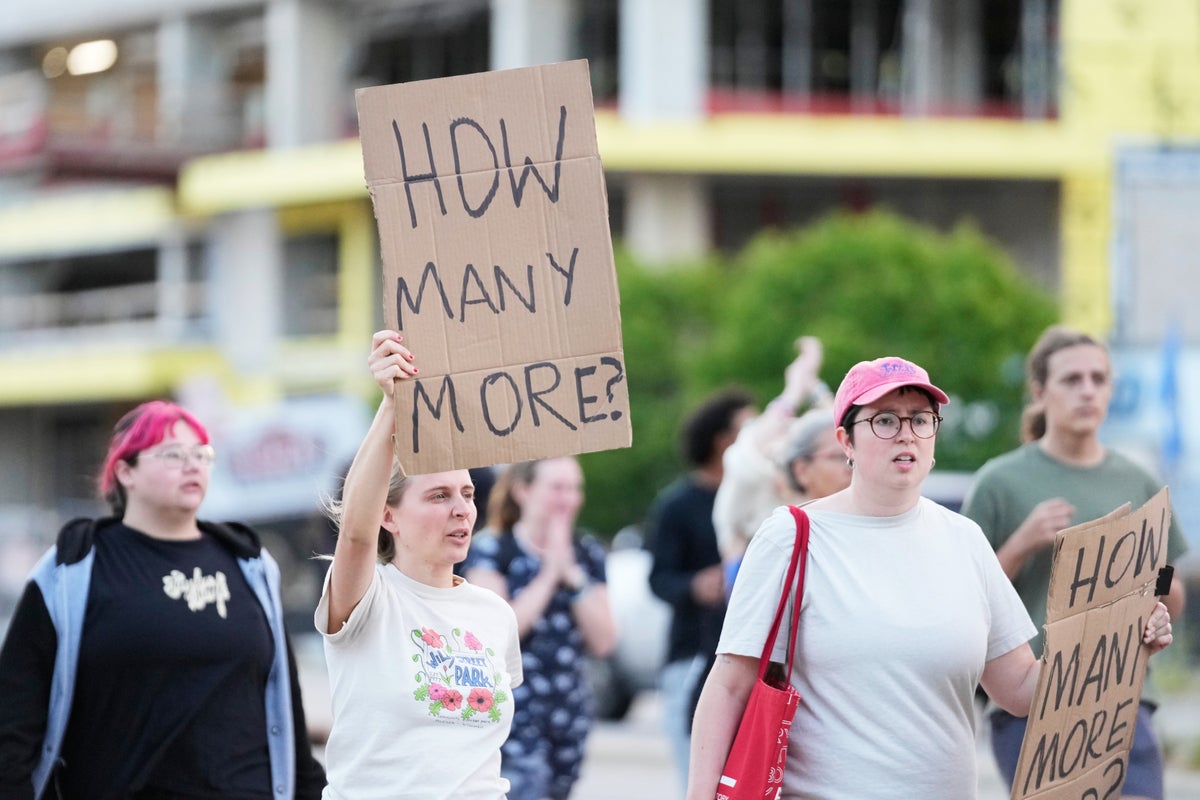
Hours after the July 2026 shooting, crowds gathered near the scene. Protesters set up a memorial with candles, flowers, and signs demanding justice. Activists marched directly to the state Capitol, taking the stage during a scheduled summer concert series hosted by the Wisconsin Chamber Orchestra. Organizers had to cancel the performance as crowd chants echoed through the square.
Brandi Grayson, head of the local advocacy organization Urban Triage, expressed the frustration felt by many residents. "Another Black man is dead on a Madison street, and our community watched him die before we even knew his name," Grayson stated publicly.
Local civil rights groups emphasized that public safety strategies must focus on de-escalation before lethal force becomes the only option left on the table.
Political Waves and Legal Realities
The timing of the shooting reverberated through state politics. Wisconsin's political figures faced immediate questions regarding police reform, oversight, and public safety funding.
Candidates running for statewide office visited the vigil site on Wednesday night. Some spoke directly to organizers, while others issued formal calls for expedited state investigations.
Under Wisconsin state law, the Department of Criminal Investigation conducts independent inquiries whenever a police officer uses deadly force. Once state agents finish gathering evidence, interviewing witnesses, and reviewing forensic data, they submit a comprehensive report to the local prosecutor.
The local District Attorney then evaluates the evidence against Wisconsin legal standards for self-defense and defense of others.
- Officers have a legal right to use lethal force if they reasonably believe it is necessary to prevent imminent death or great bodily harm to themselves or others.
- A fixed-blade knife is legally classified as a deadly weapon, which heavily influences prosecutorial reviews.
- However, independent police oversight boards also review policy compliance separately from criminal liability.
Aeiramique Glass, Madison's independent police monitor, noted that her office will conduct a thorough review once state investigators share their findings. Her office holds the authority to recommend policy changes or disciplinary measures to city leadership.
How Communities Can Push for Real Accountability
Waiting for official investigation reports takes months. Communities often feel helpless while state agencies process evidence behind closed doors. You don't have to wait passively to make an impact on municipal policy.
If you want to see meaningful changes in local law enforcement accountability, focus your energy where decisions are actually made.
Track Local Budget Meetings
City councils decide how police departments allocate resources. Attend city budget hearings and advocate directly for equipment priorities like body-worn camera programs, de-escalation training, and mental health crisis response teams.
Engage With Independent Oversight Boards
Many cities maintain civilian oversight committees or independent police monitors. These boards host public listening sessions. Submitting public comments or testifying at these meetings creates an official record of community priorities that city leaders cannot ignore.
Learn State Open Records Laws
Wisconsin has strong public records statutes. Journalists, community groups, and individual citizens have the legal right to request dispatch logs, initial incident reports, and department policy manuals. Knowing how to draft a public records request ensures communities can verify facts independently.
Support De-Escalation First Initiatives
Advocate for expanding co-responder models, where trained mental health professionals respond alongside law enforcement officers to non-violent calls. Reducing unnecessary physical confrontations protects both community members and officers on patrol.
Real reform isn't built on political press releases or social media arguments. It requires sustained, informed engagement with local government systems that control policy, funding, and oversight.