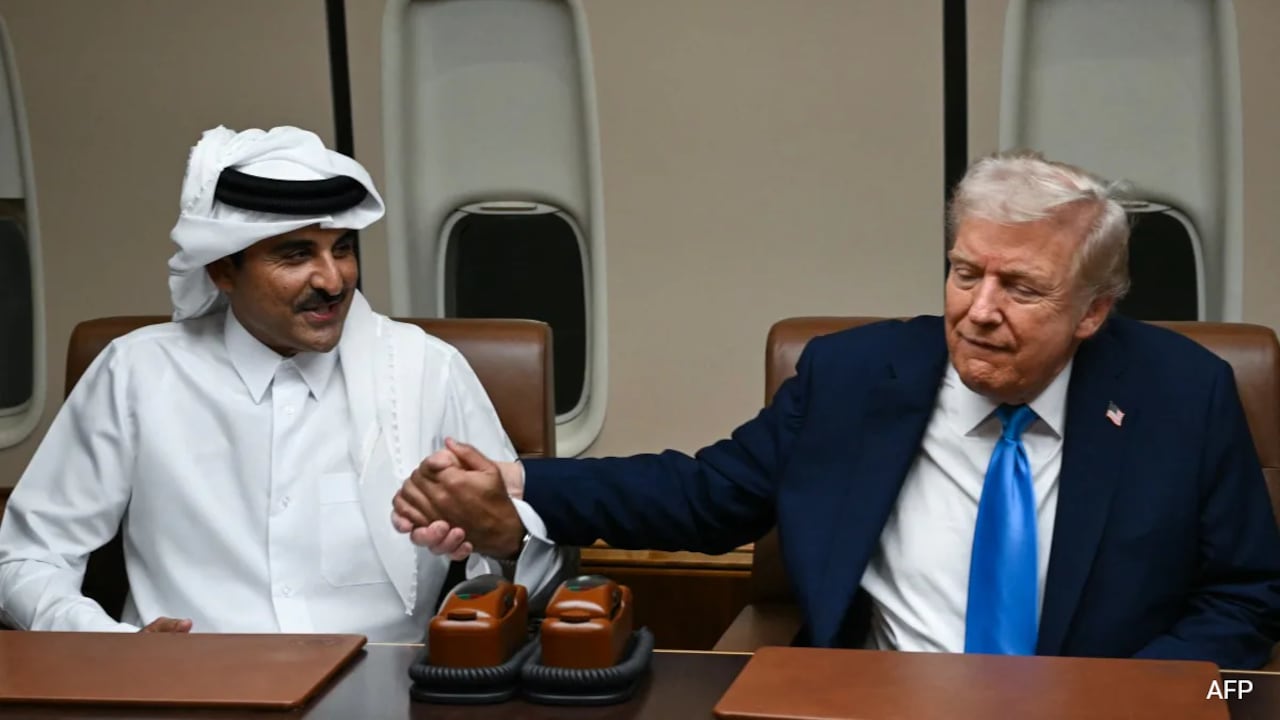
Diplomacy rarely happens in front of cameras, and when a U.S. president picks up the phone to call Doha during a Middle East crisis, it isn't just a courtesy check. Donald Trump's conversation with Qatar's Emir, Sheikh Tamim bin Hamad Al Thani, regarding the Iran conflict highlights a reality that most cable news pundits ignore. Washington can't talk directly to Tehran without massive political baggage, so Qatar remains the indispensable middleman.
You've probably seen the headlines summarizing the call in two sentences and moving on. That's a mistake. When the White House and the Amiri Diwan confirm talks centered on regional escalation and the Iran conflict, they're signaling that backchannel negotiations are actively running alongside military posturing.
Why Qatar Holds the Keys to Tehran
Most people look at a map of the Persian Gulf and see Qatar as a tiny peninsula dwarfed by Saudi Arabia and Iran. Geopolitically, though, Doha punches way above its weight class.
Qatar shares the massive North Dome/South Pars natural gas field with Iran—the largest non-associated gas field in the world. Because both nations rely on that shared underwater resource for their economic survival, Doha simply cannot afford an all-out war with Tehran. That economic interdependence forced Qatar to build a diplomatic relationship with the Islamic Republic that no other Gulf Cooperation Council member matches.
At the exact same time, Qatar hosts Al Udeid Air Base, the sprawling forward headquarters for U.S. Central Command (CENTCOM). Thousands of American troops operate out of Qatari soil.
Think about that positioning for a second. Doha houses America's primary regional military hub while maintaining open phone lines to Iran's leadership. No other country on earth sits in that specific seat. When Trump talks to Sheikh Tamim about the Iran conflict, he's speaking to the one leader who can walk out of a briefing with American generals and immediately relay a message to Tehran's Foreign Ministry without breaking protocol.
What Actually Happens on These Diplomatic Calls
When readouts from the White House or Doha say two leaders "discussed regional developments and efforts to de-escalate tensions," they're sanitizing high-stakes bargaining. Having followed Gulf diplomacy for years, I can tell you these conversations almost always boil down to three concrete pressure points.
First, there's the immediate red line problem. Washington uses Doha to pass explicit warnings to Iran about what triggers a direct, overwhelming American military response—whether that's attacks on U.S. personnel, strikes on critical oil infrastructure, or disruptions to shipping lanes. Trump's style of diplomacy leans heavily on unpredictability and maximum pressure, so having a trusted interlocutor confirm that a threat isn't a bluff matters enormously.
Second, Qatar pushes its own survival agenda. If missiles start flying across the Gulf, Qatari liquefied natural gas (LNG) tankers can't leave port. Doha's global reputation as a safe, wealthy, stable mediator evaporates overnight. Sheikh Tamim isn't just acting as a passive message board for Trump; he's actively lobbying Washington to keep off-ramps open so the region doesn't spiral into an economic catastrophe.
Third, there's the hostage and prisoner dimension. Qatar has a proven track record of brokering complex detainee swaps between Washington and Tehran, including the high-profile 2023 agreement that freed five Americans in exchange for frozen Iranian funds held in South Korea. Anytime Trump and the Emir speak, humanitarian corridors, detained nationals, and frozen assets are sitting right near the top of the agenda.
The Misconception About Mediation
A lot of critics in Washington argue that relying on Qatar legitimizes bad actors or gives Tehran too much breathing room. Honestly, that criticism misses how conflict resolution actually works in the real world.
You don't need a mediator to talk to your friends. You need a mediator when direct communication is politically toxic or legally impossible. During Trump's first term, after the U.S. withdrew from the Joint Comprehensive Plan of Action (JCPOA) in 2018 and launched its "maximum pressure" campaign, formal diplomatic channels between Washington and Tehran essentially vanished. Even the Swiss embassy in Tehran, which has represented U.S. interests in Iran since 1980, found its bandwidth stretched thin during moments of acute military crisis.
Qatar stepped into that vacuum. Over the past decade, Doha mediated between the U.S. and the Taliban, brokered ceasefires in Gaza, negotiated the return of Ukrainian children from Russia, and repeatedly kept U.S.-Iran tensions from boiling over into total war.
Does Qatar have its own interests? Of course it does. Every state does. Pretending Doha acts out of pure altruism is naive, just like pretending Washington can solve a Gulf conflict without Qatari mediation is delusional.
How to Read the Next Phase of the Conflict
If you want to understand where the Iran conflict is headed over the next few weeks, stop watching press conferences and start tracking diplomatic traffic in Doha.
Watch for sudden, unannounced visits to Qatar by senior U.S. envoys, CIA leadership, or Iranian security officials. When high-level American and Iranian delegations land in Doha within 48 hours of each other, it means a framework—whether for a temporary ceasefire, maritime security rules, or a broader de-escalation—is actively being drafted. Conversely, if Qatari officials start publicly warning that "mediation efforts face severe obstacles," it's a clear signal that both sides are digging in for another round of kinetic strikes.
Pay close attention to shipping insurance rates in the Strait of Hormuz and energy market reactions right after these White House-Doha readouts drop. Markets tend to price in real diplomatic progress faster than political commentators do, so tracking those signals will tell you immediately whether Trump's call with Sheikh Tamim actually moved the needle.