Silence.
When two leaders of nuclear-armed nations step away from the cameras, dismiss their note-takers, and close a heavy mahogany door on the sidelines of an Asian summit, the immediate sensation across the diplomatic press corps is not the roar of breaking news, but a sudden, suffocating quiet.
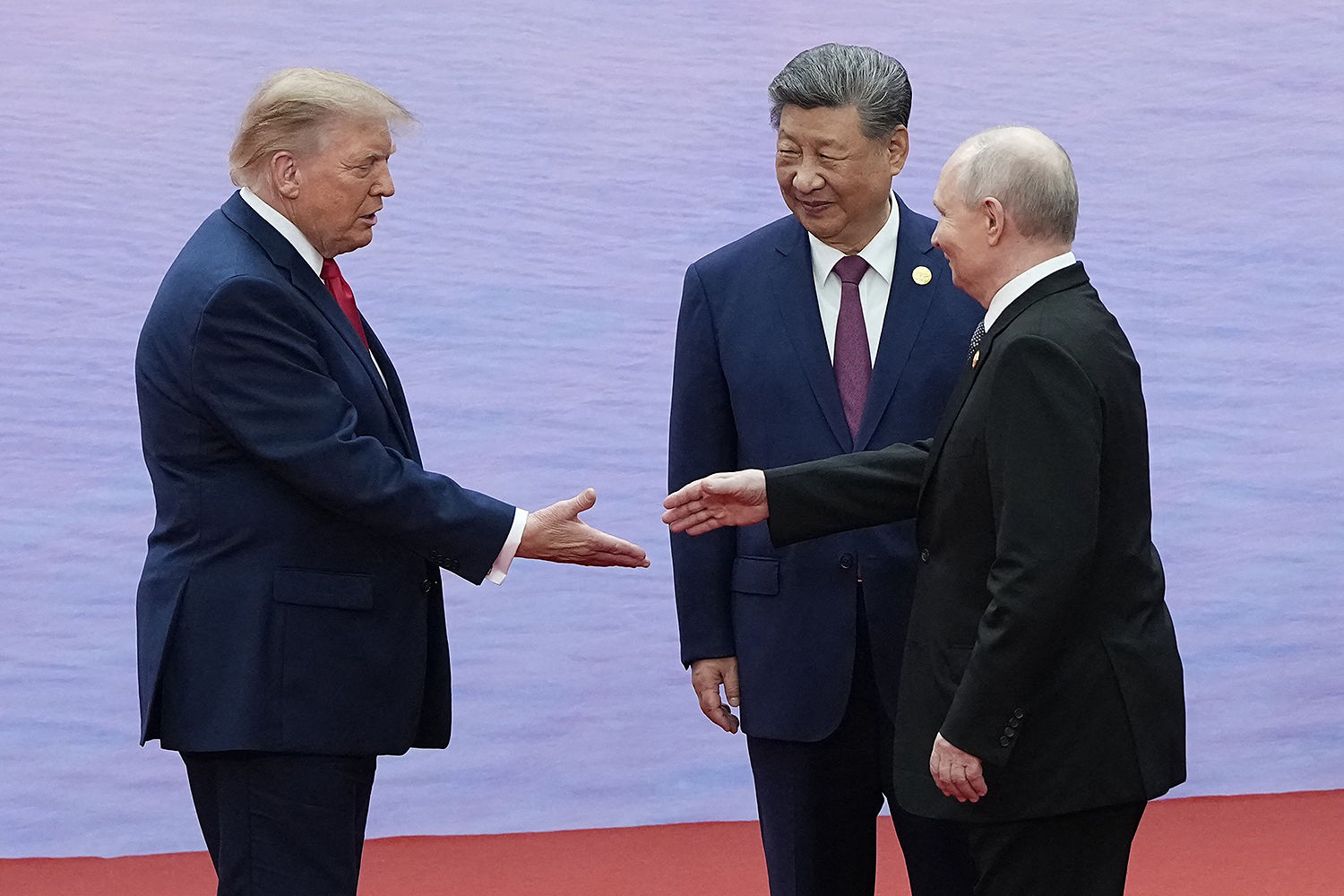
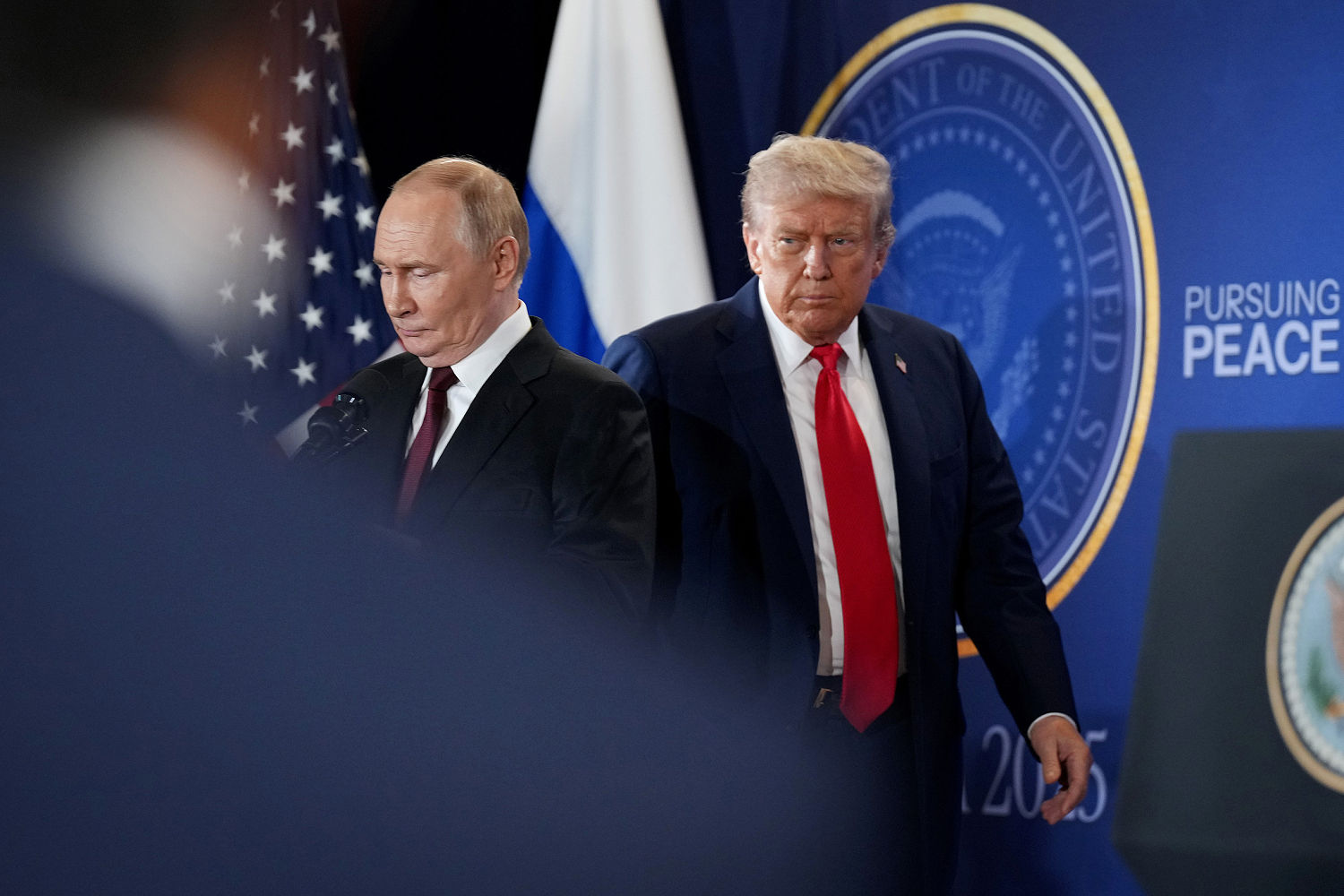
Down the hall in the media center, laptops hum and espresso machines hiss, yet for forty-five minutes or two hours, the only people who actually know what is being traded, conceded, or threatened are sitting within arm’s reach of one another, accompanied only by their interpreters. Standard wire reports treat these moments like routine calendar entries—a brief bullet point tucked between trade agreements and group photo-ops, framed as a procedural "pull-aside" on the margins of a broader multilateral gathering. That dry framing misses the point entirely. A one-on-one meeting between Donald Trump and Vladimir Putin at an Asian summit is never just an item on an itinerary; it is a high-wire act performed without a net, where the personal chemistry of two men temporarily supersedes centuries of institutional diplomacy.
To understand why a closed-door conversation thousands of miles from Washington and Moscow carries such disproportionate gravity, you have to step out of the marble corridors of international conference centers and look at the people who live downstream from the decisions made inside them.
The Invisible Ledger at the Kitchen Table
Consider a hypothetical family living in a mid-sized manufacturing town in Ohio, alongside another family in a grain-exporting port city on the Black Sea. Neither household has a seat at the Asia-Pacific Economic Cooperation forum or the East Asia Summit. Neither watches the live feeds of motorcades arriving at luxury hotels in Southeast Asia. Yet when the doors close on a bilateral meeting between the American president and the Russian president, an invisible ledger opens on both of their kitchen tables.
In Ohio, the ledger tracks the price of diesel, the stability of European supply chains, and the likelihood that a local National Guard unit will spend the next twelve months deployed overseas rather than coaching Little League. On the Black Sea, the ledger tracks whether cargo ships can clear the straits without insurance premiums doubling overnight, whether energy infrastructure will survive the winter, and whether young men in the neighborhood will receive mobilization notices.
For those of us who have spent years watching the fallout of summit diplomacy from the ground level—standing at border crossings where freight trucks sit idling for days after a sanction is announced, or sitting in dim apartments where families calculate their monthly heating bills against the latest pipeline dispute—the phrase "on the sidelines" feels like a bitter irony. Nothing about these encounters is sideline business. The formal summit, with its meticulously drafted communiqués and choreographed handshakes, is the theater; the unscripted room down the hall is where the actual script is rewritten.
The Architecture of the Unscripted Room
Why do leaders seek out these solitary encounters, and why do veteran diplomats routinely lose sleep over them?
Think of traditional international diplomacy as a massive suspension bridge. Thousands of cables—treaties, intelligence-sharing protocols, embassy cables, congressional oversight, and alliance commitments—distribute the weight of global stability so that no single gust of wind can bring the structure down. When a president enters a formal bilateral meeting flanked by a Secretary of State, a National Security Advisor, and regional experts, that bridge holds firm. Every word is vetted, every concession is weighed against decades of precedent, and every nuance is recorded in official readouts so allies in Tokyo, Berlin, and Kyiv know exactly where they stand.
A one-on-one meeting dismantles the bridge and replaces it with a tightrope.
According to historical accounts from former U.S. national security officials and diplomatic historians who have studied previous Trump-Putin encounters—most notably their 2018 summit in Helsinki and their unscheduled conversations at G20 gatherings—removing advisors from the room fundamentally alters the mechanics of negotiation. Without aides present to pass notes, correct historical assertions, or flag technical traps in real time, the conversation shifts from policy analysis to personal persuasion.
Political scientists and veteran foreign service officers point out that Vladimir Putin, trained in intelligence tradecraft and seasoned by more than two decades at the helm of the Russian state, prepares for these sessions with encyclopedic recall of treaties, borders, and grievances. Donald Trump, by contrast, relies on instinct, transactional leverage, and the belief that personal rapport can break deadlocks that career bureaucrats have failed to solve for years.
When those two distinct styles collide in a room with no official American note-taker, three critical vulnerabilities emerge:
- Ambiguity becomes a weapon. Without an agreed-upon transcript, Moscow and Washington can walk out of the same room and present entirely contradictory accounts of what was promised. In diplomacy, a perceived commitment can be just as destabilizing as a signed treaty.
- Allies are left in the dark. Nations across Europe and the Indo-Pacific base their own security postures on American guarantees. When those allies learn about shifts in U.S. posture through foreign ministry leaks rather than direct consultation, trust erodes faster than any summit communiqué can repair it.
- Complex crises get reduced to binary trades. Geopolitical conflicts involving millions of people, sovereign borders, and international law rarely lend themselves to quick real-estate-style swaps, yet the intimacy of a two-person room creates intense pressure to produce a dramatic headline.
Why Asia Becomes the Stage
There is a deliberate geography to holding this encounter on the sidelines of an Asian summit rather than in Geneva, Vienna, or Reykjavik.
A standalone summit carries suffocating expectations. If the United States and Russia announce a formal bilateral summit, global markets and news networks demand a deliverable—a signed arms-control framework, a ceasefire agreement, or a major prisoner exchange. If the leaders walk away empty-handed, the summit is branded a failure before their planes even leave the tarmac.
By tucking the meeting into the margins of a major Asian gathering—whether in Vietnam, Singapore, Japan, or South Korea—both leaders gain built-in plausible deniability. If the conversation yields a breakthrough, they can claim statesmanship on the world stage. If it stalls, they can shrug it off as an informal exchange of views during a busy week of regional diplomacy.
Yet the Asian backdrop adds another layer of silent pressure: Beijing.
Every time an American president and a Russian president sit down in the Indo-Pacific, they are doing so in China’s neighborhood. For Washington, engaging Moscow in Asia is inevitably entangled with broader strategic competition with Beijing, questions over North Korean weapons transfers, and the security of Pacific sea lanes. For Moscow, demonstrating that the Russian president can command a private audience with the leader of the free world in the heart of Asia sends an unmistakable message to regional powers—and to his own domestic audience—that Russia cannot be isolated or sidelined.
What Actually Happens Behind the Door
I remember standing outside a secure briefing room during an international security conference a few years ago, watching a senior diplomat emerge after an unscheduled forty-minute bilateral session. His collar was slightly askew, his notepad completely blank, and his expression carried the particular exhaustion of someone who had just spent nearly an hour trying to read subtext without a map. "When there are no witnesses," he told a small cluster of us quietly, "you spend the next six months trying to figure out whether a nod meant 'I hear you' or 'I agree.'"
That uncertainty is the true currency—and the true danger—of one-on-one summitry.
Publicly, the talking points surrounding a Trump-Putin pull-aside remain remarkably consistent across news cycles. Official statements from the White House and the Kremlin typically emphasize the need to maintain open lines of communication, reduce the risk of unintended military escalation, and discuss major flashpoints—ranging from Eastern Europe and Middle Eastern stability to nuclear arms control and bilateral diplomatic staffing.
Critics of the one-on-one format, including former U.S. ambassadors to Russia and bipartisan members of the Senate Foreign Relations Committee, argue that private sessions hand an asymmetric advantage to an authoritarian counterpart who faces no domestic checks and balances. They warn that without institutional witnesses, crucial details regarding sanctions relief, territorial sovereignty, or intelligence cooperation can be misunderstood or exploited.
Supporters of Trump’s approach, including former administration officials and proponents of realist foreign policy, counter that decades of scripted, committee-approved diplomacy failed to prevent major wars or halt nuclear proliferation. From their perspective, direct leader-to-leader engagement is the only mechanism capable of cutting through bureaucratic inertia and testing whether a pragmatic deal is genuinely possible.
Both arguments carry weight, and pretending the answer is simple would be dishonest. Diplomacy is not a clean laboratory experiment; it is messy, human, and fraught with risk either way. Refusing to talk to an adversary carries the peril of sleepwalking into catastrophe, while talking without guardrails carries the peril of giving away the store in the dark.
The Echo After the Handshake
Eventually, the heavy door swings open.
The cameras click in a frantic burst of shutter noise. The two leaders step forward to offer brief, carefully calibrated remarks—a mention of a "very good and productive conversation," a vague nod toward future cooperation, a practiced smile for the pool photographers—before turning down separate corridors toward their respective motorcades.
Within minutes, the headlines flash across phones in Washington, Moscow, Brussels, Kyiv, and Tokyo. Analysts dissect the body language, measure the length of the handshake, and parse every adjective for hidden signals.
Yet the real test of what happened inside that quiet room does not unfold under the bright lights of the summit press hall. It unfolds weeks and months later, in the quiet places no camera ever visits: in the sudden rerouting of a cargo vessel in the Black Sea, in the tense silence of a NATO defense ministers' meeting, and at a kitchen table in Ohio where someone checks the price of fuel and wonders, without ever knowing what was actually said behind closed doors, who just blinked.