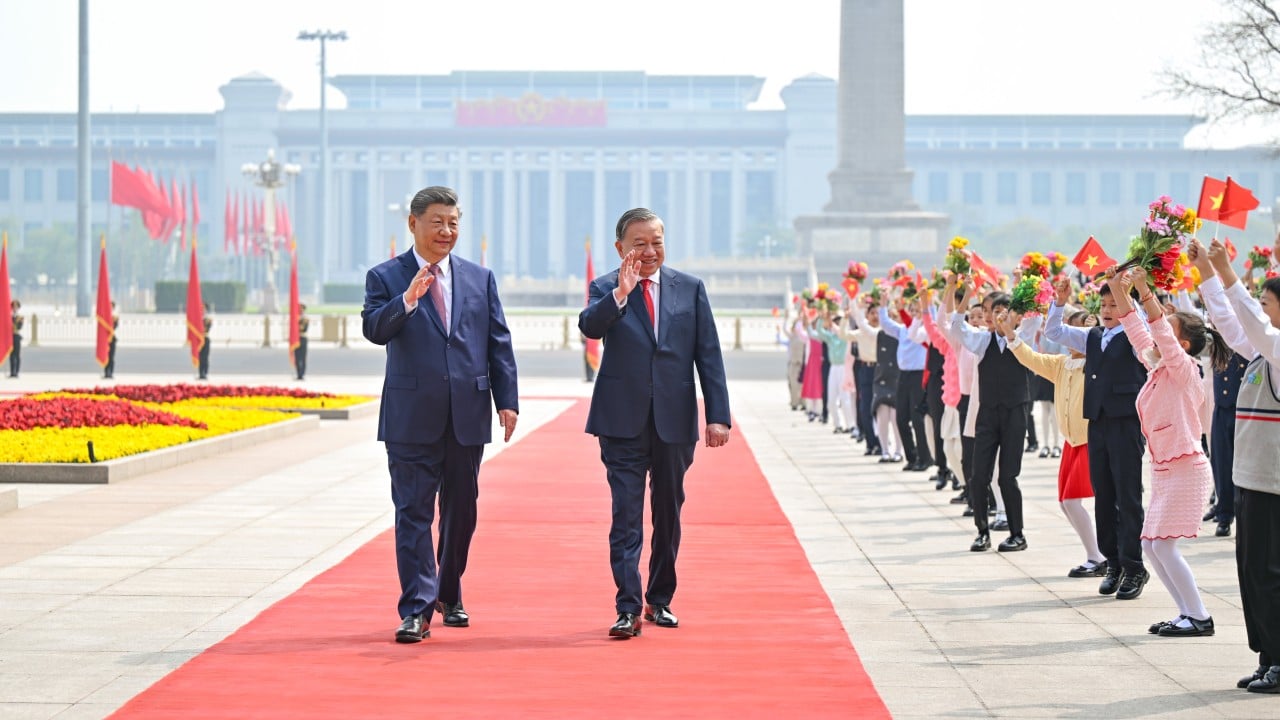
The lazy consensus in modern geopolitics is that Hanoi and Beijing are "perfectly aligned" because they share a border, a political ideology, and a manufacturing supply chain. It is a surface-level read that ignores the tectonic friction grinding beneath the floorboards. To claim these two nations are in lockstep is to mistake a hostage situation for a marriage.
I have spent years watching regional supply chains shift. I have seen the "China Plus One" strategy move from a boardroom theory to a desperate, multi-billion dollar scramble. If you think Vietnam is China’s loyal junior partner, you aren't looking at the trade data. You are looking at the propaganda.
The Myth of Ideological Glue
Pundits love to point to the shared Communist framework. They assume the "comradeship" between the VCP and the CCP creates a natural alliance. This is historical illiteracy.
Vietnam and China have spent the better part of a millennium in conflict. The 1979 border war is not a distant memory; it is a living scar in the Vietnamese military psyche. While Western analysts see two Red flags, Hanoi sees a 2,000-year struggle against northern hegemony.
Vietnamese leadership isn't aligning with China out of brotherly love. They are practicing "Bamboo Diplomacy"—bending with the wind to avoid snapping. They buy Chinese infrastructure because it’s cheap and immediate, while simultaneously inviting American aircraft carriers to dock in Cam Ranh Bay. That isn't alignment. It’s a hedging strategy designed to keep Beijing at arm’s length.
The Manufacturing War is Zero-Sum
The "alignment" argument falls apart the moment you look at the factory floor. Vietnam is not China’s partner; it is China’s most lethal competitor.
For decades, China was the world’s workshop. Now, as Chinese labor costs soar and demographic collapse looms, Vietnam is actively cannibalizing China’s market share. When Samsung or Apple shifts production from Guangzhou to Bac Ninh, China loses.
Why the Supply Chain is a Battlefield
- Labor Arbitrage: Vietnam’s manufacturing wages are roughly half of China’s. In a world of tightening margins, that is an existential threat to Chinese mid-tier manufacturing.
- Trade Circumvention: Much of the current "cooperation" is actually Chinese firms using Vietnam as a "laundry mat" to bypass US tariffs. Beijing hates this. It hollows out their domestic industrial base while enriching a neighbor they don't fully trust.
- Intellectual Property: Vietnam is aggressively building its own tech ecosystem. They aren't content being the assembly line for Chinese components; they want the high-value design work.
If you believe these two economies are aligned, you're missing the fact that they are fighting for the same dollar, the same container ship, and the same Western consumer.
The South China Sea Is an Unfixable Friction
You cannot be "perfectly aligned" with a neighbor that claims your territorial waters as their own.
The Nine-Dash Line is the ultimate deal-breaker. China’s militarization of the Paracel and Spratly Islands isn't just a maritime dispute; it’s a direct threat to Vietnam’s energy security and fishing industry. Vietnam has been quietly dredging its own islands and hardening its coastal defenses for a reason.
While the diplomatic cables speak of "comprehensive strategic partnerships," the reality on the water is a series of high-stakes standoffs. Vietnamese fishermen are routinely harassed by the Chinese Coast Guard. Hanoi is diversifying its arms imports—buying from Russia, India, and Israel—specifically to counter Chinese naval dominance. You don't buy BrahMos supersonic cruise missiles to use against "aligned" partners.
The FDI Illusion
Analysts point to the surge of Chinese Foreign Direct Investment (FDI) into Vietnam as proof of a deepening bond. This is a fundamental misunderstanding of how capital works.
Capital is a coward. Chinese money is fleeing China because the domestic environment is becoming toxic for private enterprise. This isn't a strategic deployment by the CCP; it’s an exit strategy by Chinese billionaires.
- Scenario: A Chinese textile mogul moves his operations to Hai Phong.
- The Lazy Read: "China and Vietnam are integrating their economies."
- The Reality: "A Chinese businessman is moving his wealth and production beyond the reach of Beijing’s regulators."
Vietnam is the beneficiary of Chinese instability, not a partner in its rise.
Stop Asking if They Are Friends
The "People Also Ask" sections of the internet are filled with variations of "Is Vietnam becoming a Chinese satellite?"
The answer is a blunt "No." In fact, Vietnam is arguably the most effective counter-weight to Chinese influence in Southeast Asia. Unlike Cambodia or Laos, which have arguably been bought, Vietnam has the population, the military history, and the economic momentum to say "No" to Beijing.
Vietnam’s real goal is strategic autonomy. They want to be the hub that connects the East and the West without being owned by either. If that means signing a trade deal with Beijing on Monday and a defense pact with Washington on Tuesday, they will do it.
The Downside of Disruption
To be fair, this "divorce" isn't clean. Vietnam is still heavily dependent on Chinese raw materials. Their power grid in the north relies on Chinese electricity. If Beijing decided to turn off the taps tomorrow, Vietnam would suffer a massive industrial heart attack.
But dependency is not alignment. It is a vulnerability that Hanoi is working feverishly to close. Every new LNG terminal and every new trade agreement with the EU is a brick in the wall they are building to separate themselves from the Middle Kingdom.
The Verdict
Investors and diplomats who buy into the "perfectly aligned" narrative are going to get burned when the next maritime clash or trade spat occurs. The friction is real, the competition is fierce, and the historical animosity is deep.
Vietnam is not China’s protégé. It is China’s replacement.
Stop looking for harmony where there is only calculated, cold-blooded competition. The future of the region isn't a Sino-Vietnamese bloc; it's a bitter struggle for who gets to be the factory of the 21st century.
Choose your side, but don't pretend they're on the same one.