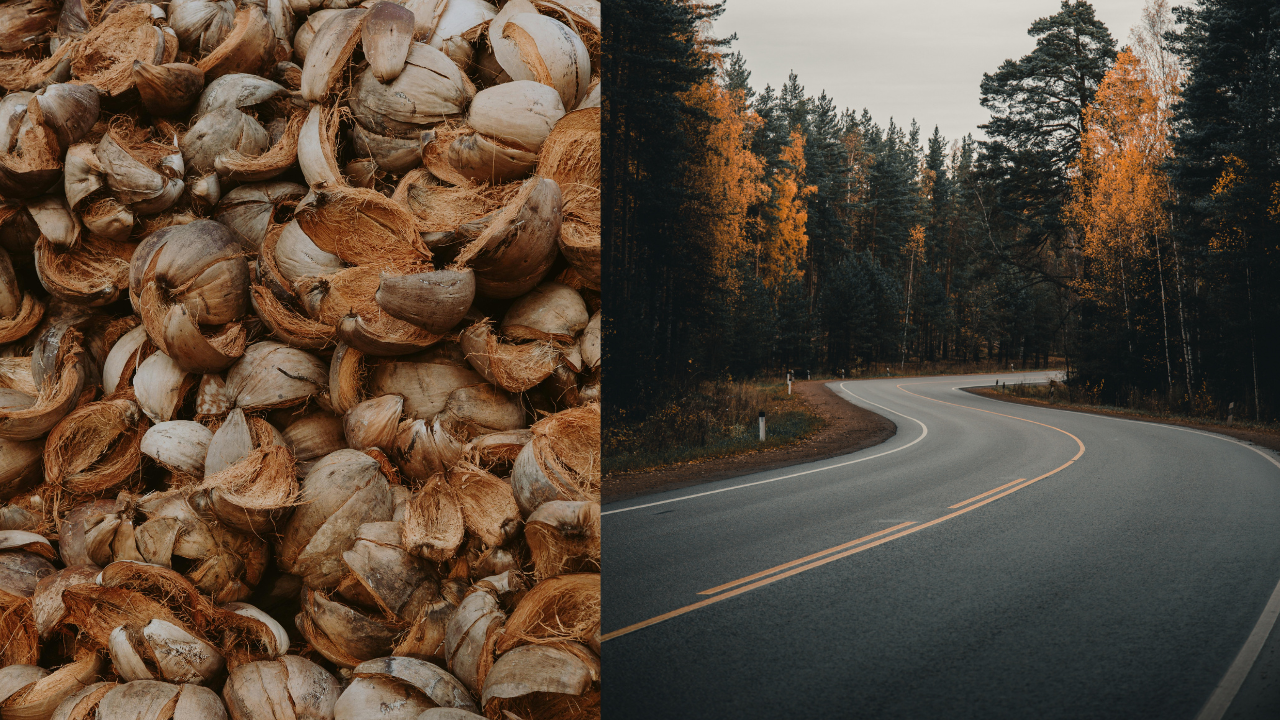
Highways are literally melting. As sustained summer temperatures push pavement surfaces past sixty degrees Celsius, traditional petroleum-based asphalt binders soften, deform under heavy freight loads, and develop deep ruts that accelerate structural failure. Municipalities spend billions annually patching surfaces designed for a climate that no longer exists. Into this mounting infrastructure crisis steps an unexpected material: coconut shell biochar.
Recent laboratory data indicates that integrating coconut shell biochar into asphalt mixtures at a precise 12.5 percent substitution rate dramatically increases heat resistance and structural strength. Asphalt treated with this agricultural byproduct exhibits superior rutting resistance, lower susceptibility to thermal cracking, and an extended service life. Yet, moving from controlled university trials to municipal paving contracts requires confronting entrenched industry inertia, supply chain logistics, and the hard economics of industrial chemistry.
The Chemistry of Carbon Reinforcement
Asphalt concrete is a composite material consisting of mineral aggregates bonded together by bitumen, a heavy hydrocarbon residue derived from crude oil. Bitumen behaves like a high-viscosity fluid rather than a rigid solid. Under sustained heat and heavy axle loads, the molecular bonds within bitumen slip past one another, causing permanent deformation.
Biochar changes this dynamic entirely. Produced through the pyrolysis of organic waste—baking coconut shells in an oxygen-depleted environment—the resulting material consists of a highly porous, stable carbon framework with an immense surface area. When blended into hot-mix asphalt, this carbon matrix absorbs the lighter fractions of the bitumen binder, stiffening the internal structure and preventing the binder from flowing under thermal stress.
Coconut shells possess unique structural advantages over wood or crop residue biochars. They contain high lignin content and dense cellular walls, yielding a harder, more resilient carbon skeleton after pyrolysis. Under a scanning electron microscope, bitumen can be seen anchoring directly into the microscopic pores of the coconut biochar particles, creating a mechanical interlock that traditional mineral fillers simply cannot match.
Navigating the Sweet Spot
Engineering asphalt is a delicate balancing act. Add too little modifier, and performance gains disappear. Add too much, and the mixture becomes unworkable, brittle, and prone to premature fatigue cracking.
The 12.5 percent threshold discovered by materials scientists represents a critical tipping point. Below ten percent, the carbon particles are too dispersed within the bitumen phase to create an effective continuous network. Above fifteen percent, the extreme surface area of the biochar absorbs so much bitumen that the asphalt mix dries out, losing the flexibility required to withstand the dynamic deflection of heavy trucks rolling over joints and seams.
At the optimal 12.5 percent replacement level, the mixture maintains adequate workability during compaction while significantly elevating the softening point of the binder. Laboratory wheel-tracking tests show that treated asphalt samples endure twice the number of load cycles before reaching terminal rutting depths compared to control samples using unmodified neat asphalt.
The Supply Chain Reality
Laboratory success rarely translates directly to the asphalt plant without friction. The civil engineering sector operates on strict specifications, massive volumes, and risk aversion. Convincing state departments of transportation to rewrite specifications to accommodate agricultural waste is an uphill battle.
Sourcing presents the first major hurdle. Coconut production is concentrated in tropical regions across Southeast Asia, India, and parts of Central and South America. Transporting raw shells across oceans to industrial nations introduces carbon costs that can negate the environmental benefits of the biochar itself. For biochar-modified asphalt to scale globally, pyrolysis facilities must be established regionally, close to both agricultural processing hubs and municipal asphalt plants.
Furthermore, batch plants must adapt their material handling equipment. Biochar is an extremely fine, lightweight powder. Introducing it into an industrial pugmill without creating severe dust hazards or inconsistent blending requires specialized pneumatic injection systems. Asphalt producers operating on tight margins are reluctant to invest in capital equipment upgrades without guaranteed, long-term procurement contracts from local governments.
Shifting Economic Incentives
Pavement economics depend on lifecycle cost analysis. Traditional asphalt pavements typically require mill-and-overlay maintenance every seven to ten years. If coconut shell biochar extends that window by even three years, the cumulative savings for state and municipal budgets run into the millions.
Yet, upfront material costs remain a sticking point. Virgin bitumen is cheap, heavily subsidized by the petroleum industry, and deeply integrated into existing supply chains. Biochar, even when derived from waste products, requires energy-intensive pyrolysis, processing, grading, and quality control. Unless carbon credits or government mandates penalize high-emission petroleum binders, private contractors will continue using standard formulations regardless of long-term durability improvements.
The path forward does not lie in idealistic environmental rhetoric. It rests on hard performance data and risk mitigation. As extreme weather events strain municipal budgets beyond breaking point, infrastructure managers are running out of alternatives. The roads of the next decade will either be rebuilt using tougher, carbon-fortified materials or they will continue to rut, crack, and fail beneath the weight of an overheating world.