The morning air in London smells of wet pavement and diesel exhaust. A delivery driver named Marcus turns his key in the ignition, watching the dashboard digital display tick downward. He does not read geopolitical journals. He does not track troop movements across the Strait of Hormuz. He simply knows that the numbers on the pump down the street changed again last night, shifting upward like an uninvited guest making themselves comfortable in his living room.
That shift did not happen in a vacuum. It began thousands of miles away, sparked by words thrown across international borders, hardening into strategy, and finally translating into the cold mathematics of global commodities trading.
Oil prices do not climb because of dry statistics printed on corporate ledger pages. They climb because humans panic, because nations posture, and because the fragile veins of global energy are easily bruised by a single threat.
When Donald Trump stood before microphones and vowed swift, forceful retaliation following an attack tied to Iranian forces, financial markets reacted before the echoes of his voice had even faded from the room. Traders in New York and London did not evaluate the human cost. They evaluated risk. They saw disruption. They saw tankers potentially trapped, pipelines targeted, and supply lines severed.
Within hours, crude benchmarks spiked. Brent and West Texas Intermediate surged, climbing past thresholds that had held steady for months.
Consider what happens next: that abstract surge inside a glass-walled trading desk immediately cascades outward. It hits a refinery in Rotterdam. It dictates the fuel surcharge for a cargo ship crossing the Atlantic. And eventually, it reaches Marcus, sitting in his idling van, calculating whether he can afford to visit his mother this weekend or if the fuel cost eats too deep into his grocery budget.
This is the hidden architecture of modern energy. We live tethered to a invisible umbilical cord stretching straight into the Middle East. Whenever tension flares in that region, the pulse quickens everywhere else.
History repeats its rhythms with terrifying precision. We have seen this script before. Decades ago, oil shocks redefined economies, sparked inflation, and reshaped how ordinary people lived their daily lives. Whenever political rhetoric sharpens into threats of military retaliation, the market prices in catastrophe. The threat alone acts as a tax on global commerce.
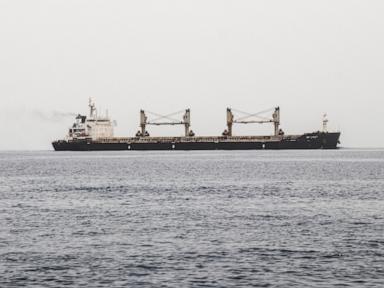
(Hypothetical scenario: Imagine a single supertanker navigating the narrow waters of the Persian Gulf at midnight. The crew moves in silence, running dark, knowing that a miscalculation between two superpowers could turn their steel vessel into a geopolitical flashpoint. That tension is real. It is felt in racing heartbeats and gripped steering wheels.)
Yet, the danger lies not just in the immediate spike, but in the long shadow it casts. When oil spikes, fertilizer costs rise because modern agriculture relies heavily on petroleum. Food prices follow. Transportation costs swell. The ripple effect touches every corner of the consumer economy, punishing those least equipped to absorb the blow.
Marcus taps his steering wheel, staring at the fuel gauge. He does not care about the diplomatic chess match. He cares about the price at the pump.
And that price is simply the physical manifestation of political friction, burning brightly in every tank, waiting for the next spark to drop.